
Mold Inspection Myrtle Beach: Why Fan-Only AC Settings Make Homes Feel Damp

A Myrtle Beach home should not feel damp after the thermostat reaches its set temperature. The rooms may feel cool, the vents may still move air, and the system may sound active, but the air inside the home may still carry too much moisture. Around the Grand Strand, one thermostat setting often creates confusion: the AC fan is set to “On” instead of “Auto.” For mold inspection Myrtle Beach homeowners can understand and act on, this setting matters because the fan keeps running after the cooling cycle ends, which means the home keeps getting airflow without the same moisture removal.
Fan-only AC use is more than a small comfort preference. It is a setting that changes how moisture moves through the home after the system stops actively cooling. That matters because Myrtle Beach homes already deal with high outdoor humidity, closed rooms, ductwork, and surfaces that stay cooler than the surrounding air. A homeowner may hear the fan running and think the system is working, while the home remains damp in the areas where humidity collects first.
The Problem Is Not That the AC Is Off
The confusing part is that the AC system may still sound like it is doing its job. Air comes through the vents, the thermostat shows the right number, and the room feels cooler than it did earlier in the day. The problem is that the cooling cycle and the fan cycle are not the same thing. Once the compressor stops, the system no longer dries the air as it does during active cooling.
The U.S. Department of Energy makes this distinction in its guidance for hot, humid climates. A home needs both lower temperature and lower humidity to feel comfortable. That matters in Myrtle Beach because a house can reach 72 degrees and still feel clammy if the AC system has not removed enough moisture. A thermostat reading tells you the temperature, but it does not tell you how much water vapor remains in the indoor air.
A fan-only humidity complaint often sounds specific inside the home:
- “The house is cool, but the bedrooms feel damp.”
- “The vents keep blowing, but the air still feels heavy.”
- “There is a musty smell when we walk into the house.”
- “One room feels worse after the door stays closed.”
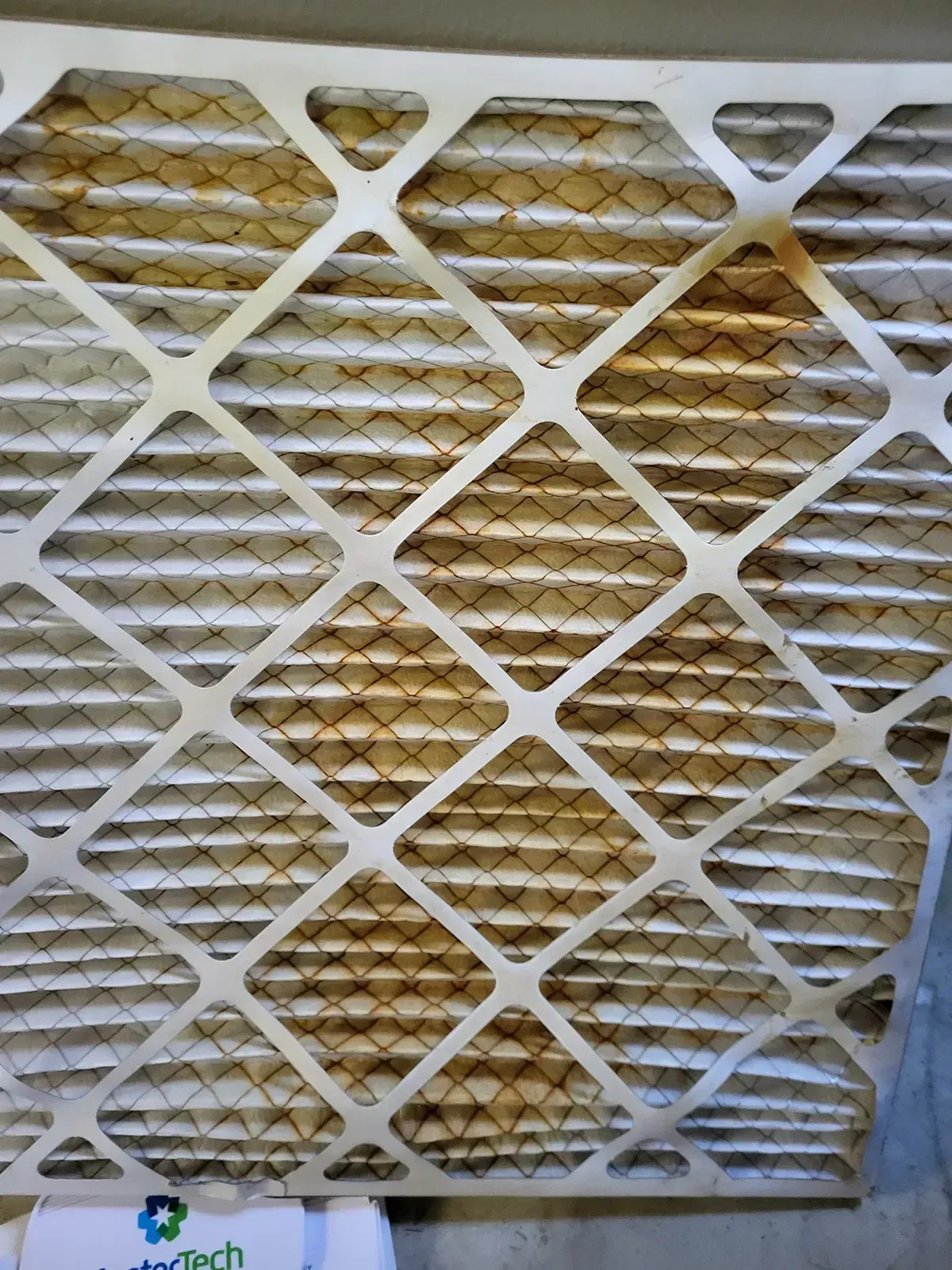
- “The area around the supply vent looks dirty or stained.”
Those comments matter because they describe moisture behavior, not only comfort. The fan setting does not explain every damp house, but it is worth checking when the system runs frequently, and the home still feels stale. In our area, this problem can start showing signs without a flood, roof leak, or plumbing failure. It may start as a recurring humidity pattern caused by how the AC fan operates between cooling cycles.
What Fan-Only Mode Does To Moisture
When the AC is actively cooling, humid indoor air moves across the cold indoor coil. Moisture leaves the air, collects on that coil, and drains out of the system. That is the part of the process homeowners do not see, but it is the part that matters most for this issue. If the fan stops during the cooling cycle, the water left on the coil has more time to drain away.
The concern starts when the fan keeps running after the cooling cycle ends. Oak Ridge National Laboratory and Lawrence Berkeley National Laboratory have modeled residential AC moisture behavior, including water left on the cooling coil after cooling stops. Their work recognizes that moisture left on the coil can re-enter the airstream when the blower runs while cooling is off. That is the technical reason fan-only mode becomes a humidity issue instead of a harmless airflow setting.
The fan is still moving air through the return, across the coil, through the supply ducts, and back into the rooms. The difference is that the compressor is no longer actively pulling moisture from the air. In that moment, the system may move some of the same moisture it was supposed to remove. The homeowner feels air movement, but the house may be recirculating moisture.
Air Movement Is Not Moisture Removal
Fan-only mode feels reasonable because a moving room feels better than a still room. That does not mean the home is drying out. Air movement changes comfort at skin level, while moisture removal changes the actual condition of the indoor air. Those are separate results, and confusing them is where this setting causes trouble.
Definition: Fan “On” vs. Fan “Auto”
| Thermostat setting |
What happens |
Why it matters for humidity |
| Fan set to “Auto” |
The fan runs during the cooling cycle and shuts off when the cooling call ends. |
Moisture collected on the coil has more time to drain out of the system. |
| Fan set to “On” |
The fan runs continuously, including after the compressor stops cooling. |
Air keeps moving across the wet coil and through the duct system between cooling cycles. |
A 2024 National Renewable Energy Laboratory report on humidity control in hot-humid climates points to the same concern with off-cycle air movement. The report notes that air movement during off-cycle periods can cause water to evaporate from the coil into the airstream, increasing indoor humidity. That connection matters here because Myrtle Beach homes spend long periods in the cooling season, and small humidity mistakes repeat many times throughout the day. The setting is not a one-time event; it becomes a pattern.
Why This Setting Matters More in Myrtle Beach
Myrtle Beach homes have less room for sloppy humidity control because outdoor air already carries a heavy moisture load for much of the cooling season. The fan-only setting does not create coastal humidity, but it can keep indoor moisture moving after the system stops drying. That becomes more noticeable in homes with closed bedrooms, shaded rooms, attic duct runs, crawl space influence, or spaces that do not get steady airflow. These are the rooms where a homeowner often notices the problem before understanding the cause.
This is also why the issue should not be reduced to “mold grows where it is wet.” The more useful question is where the moisture shows up first. In many homes, the clues appear around supply vents, closets, carpets, and rooms that stay closed for hours. These areas provide a clearer picture of the moisture pattern than the thermostat reading alone.
| What the homeowner notices |
What it may indicate |
| Gray or brown ring around a ceiling supply vent |
Moisture and dust collecting where cool supply air meets the ceiling surface |
| Musty odor in a closed bedroom |
Humidity lingering in a low-airflow room |
| Damp carpet edge near a floor register |
Moisture collecting near supply air and flooring material |
| Stale smell from a closet |
Humidity trapped in a space with limited air movement |
| Condensation around a grille |
Cool surfaces meeting humid indoor air |
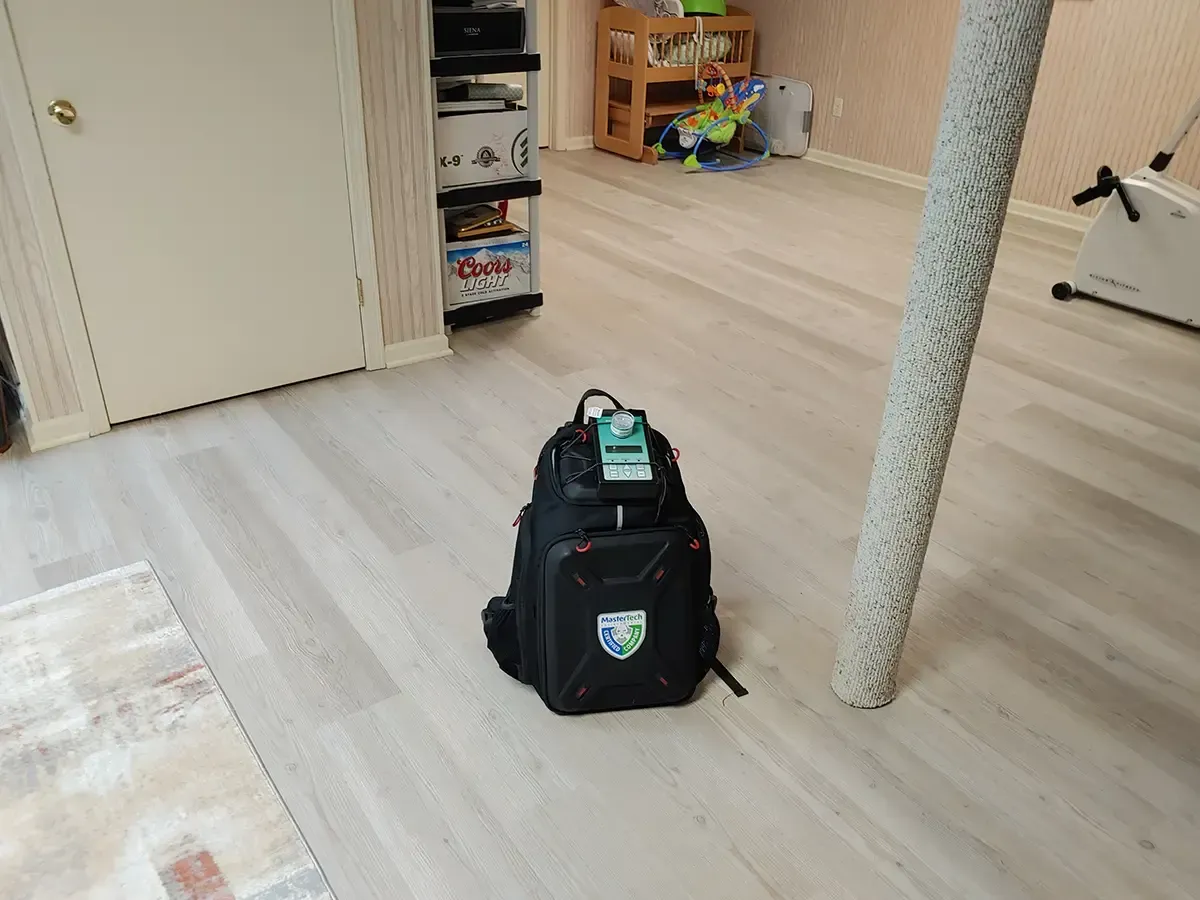
At MasterTech, this is the kind of pattern we pay attention to when someone says the house feels cool but not dry. The fan setting is not the whole story, but it is part of the moisture behavior inside the home. A musty odor near one vent, discoloration around another, and a bedroom that feels damp after the door stays closed all point to how air and humidity are moving. That is more useful than treating the thermostat number as proof that the house is fine.
That is also why mold inspection in Myrtle Beach, the one homeowners rely on, should look beyond visible spots. The pattern matters: where the odor starts, where staining appears, which rooms feel damp, and whether the HVAC fan setting is keeping moisture active between cooling cycles.
What to Change First
The first change is direct: set the thermostat fan from “On” to “Auto.” That lets the fan run with the cooling cycle instead of running across the wet coil after cooling ends. University of Georgia Extension provides the same homeowner-facing guidance for humid conditions, recommending the auto fan setting and warning that continuous fan operation can reintroduce moisture into the home. That advice fits Myrtle Beach because the home needs the AC system to remove moisture, not keep moving it after the drying cycle stops.
Use a ceiling fan or portable fan when a room needs air movement while people are in it. That moves air inside the room without forcing the HVAC system to circulate air between cooling cycles. It also prevents air from being pushed across the wet indoor coil after the compressor shuts off. The difference is practical: room fans help people feel cooler, while the AC system should manage cooling and moisture removal.
After the fan is set back to Auto, watch the same rooms and surfaces for several days with similar weather. Do not judge the change by one hour or one room. Look for musty odor near vents, stale bedrooms, damp carpet edges, condensation around supply grilles, or discoloration at ceiling registers. The U.S. Environmental Protection Agency frames mold prevention in terms of moisture control and recommends keeping indoor relative humidity below 60 percent, with 30 to 50 percent as the preferred range.
The Fan Setting Is the First Thing to Correct
A Myrtle Beach home that feels cool but damp should not be ignored, especially when the HVAC fan runs all day. The fan setting is not the only possible cause, but it is one of the simplest places to start because it changes how moisture moves after the cooling cycle ends. When the fan is set to “On,” the system keeps moving air after it stops actively drying the home.
Set the fan to “Auto” and watch the rooms where the problem shows up first. Pay attention to musty odor near vents, damp carpet edges, stale bedrooms, condensation around supply grilles, and discoloration around ceiling registers. If those signs improve, the fan setting was likely part of the humidity problem.
If those signs persist, the home needs closer attention, as moisture is still collecting somewhere. The important point is not that fan-only mode automatically means mold. The point is that in Myrtle Beach, fan-only mode can keep a humidity problem active while the homeowner thinks the AC is helping. That is why the fan setting should be checked early when a home feels cool, damp, and musty at the same time.