The Hidden Dangers of Attic Mold in Myrtle Beach Homes

Most homeowners already know attic mold is a problem. It can create musty odors, raise indoor air concerns, and lead to cleanup costs. Those concerns are real, but they are not always the most important part of the issue. The hidden danger is what attic mold may reveal about damage happening in areas of the home most people rarely inspect.
In the Myrtle Beach area, attic mold often stems from moisture movement. Coastal humidity, heavy rain, storm-driven water, long cooling seasons, and attic ductwork all place pressure on roof and attic systems. At MasterTech, we view attic mold as more than just visible growth on wood. We view it as a warning sign that moisture may already be affecting roof decking, insulation, ductwork, pest conditions, and the future resale value.
The Obvious Problem Is Not Always the Biggest One
When homeowners find attic mold, they often focus on the visible growth first. That makes sense because mold is what they can see, smell, or photograph. The problem is that visible mold often appears after moisture has already been present long enough to affect the attic system. The mold is the visible clue, while the damage behind it may be less obvious.
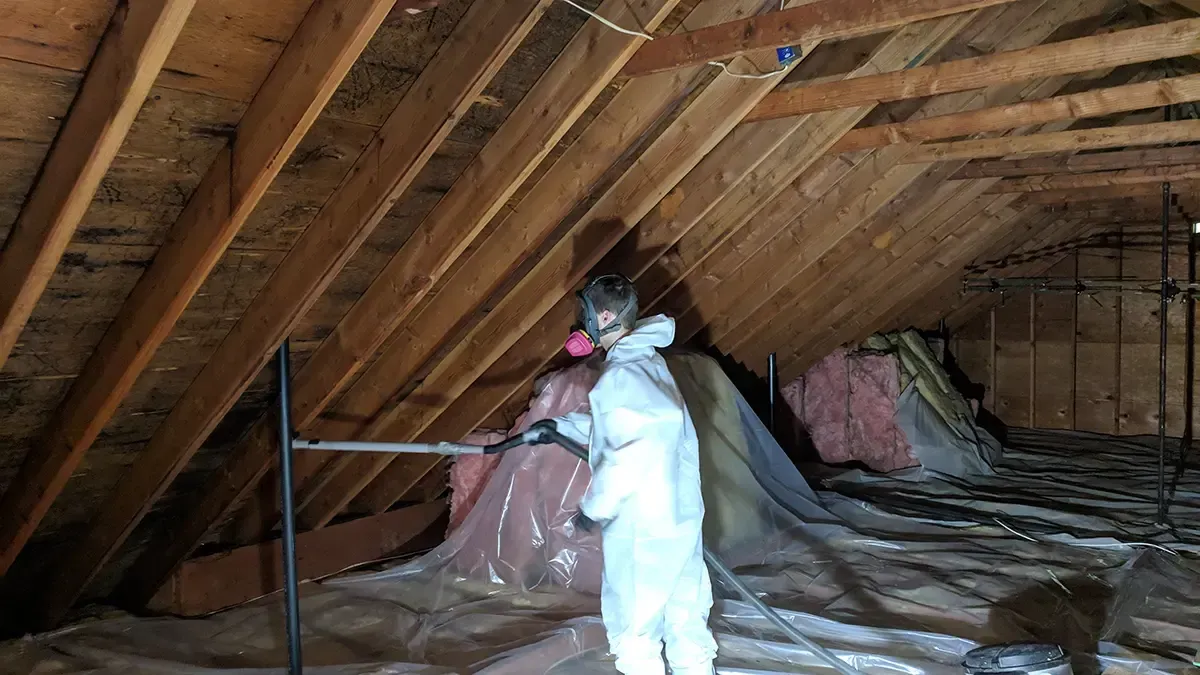
That is why attic mold remediation Myrtle Beach homeowners request should not be treated as surface cleanup alone. A proper look at the attic should ask what stayed wet, why it stayed wet, and which materials were affected. If the answer stops at killing or covering visible mold, the hidden problem may continue to damage the home.
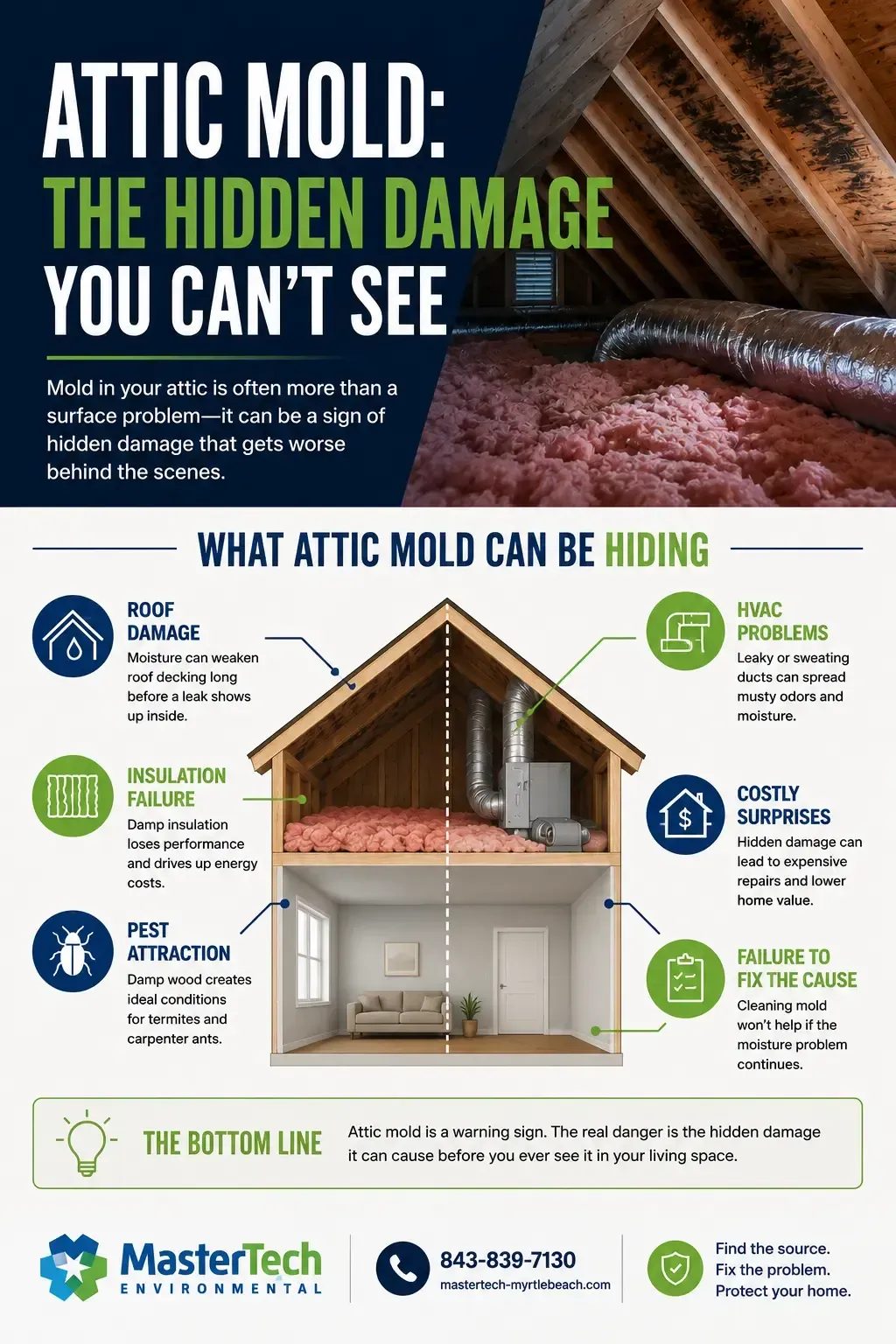
Common issues homeowners already expect:
- Visible mold on roof decking or rafters
- Musty attic odor
- Concern about indoor air quality
- Cleanup and remediation costs
- Dark staining on attic wood
Hidden issues homeowners often miss:
- Moisture weakening roof sheathing before a ceiling leak appears
- Wet insulation losing performance without looking destroyed
- Attic ductwork moving odor or humid air into living areas
- Damp wood creating better conditions for termites or carpenter ants
- Resale problems triggered by inspection findings and repair documentation
Moisture Can Damage the Roof Before You See a Leak
A ceiling stain is not always the first sign of a roof problem. In many homes, the attic is the first to show warning signs. Moisture can collect on roof sheathing, around nails, near vents, at flashing points, or under roof penetrations before water reaches finished rooms. That delay is what makes the damage easy to miss.
This matters locally because Myrtle Beach homes deal with wind-driven rain, tropical weather patterns, humid air, and repeated wetting events. A small roof issue does not always show up as an obvious drip. It may first appear as attic staining, nail rust, swollen decking, or mold growth on the underside of the roof deck.
| Hidden sign |
What it may mean |
Why it matters |
| Rusted roofing nails |
Condensation or roof wetting |
Shows moisture may be collecting above the ceiling |
| Soft or swollen decking |
Wood has absorbed moisture |
May move the issue beyond surface mold |
| Staining near vents or flashing |
Water may be entering at weak points |
Can reveal a roof issue before the room below shows damage |
| Sagging or delaminated sheathing |
Material performance may be reduced |
May require roof repair, not only mold cleanup |
Wet Insulation Can Quietly Cost Money
Insulation damage is easy to underestimate because it may still look like insulation. Damp, dirty, or compressed insulation can lose performance and hold moisture against nearby wood. The homeowner may never connect attic mold with warmer rooms, longer air conditioner run times, or uneven comfort.
That hidden cost matters in Myrtle Beach because cooling season is long and humidity is part of daily home performance. If attic insulation is wet or compacted, the home may work harder to stay comfortable. The mold may be the visible problem, but the energy loss and trapped moisture may be the ongoing damage.
- Matted fiberglass that no longer holds its shape
- Damp loose-fill insulation below stained roof areas
- Dirty insulation patterns that show air leakage
- Moisture held against wood or ceiling materials
- Higher cooling demand during hot, humid months
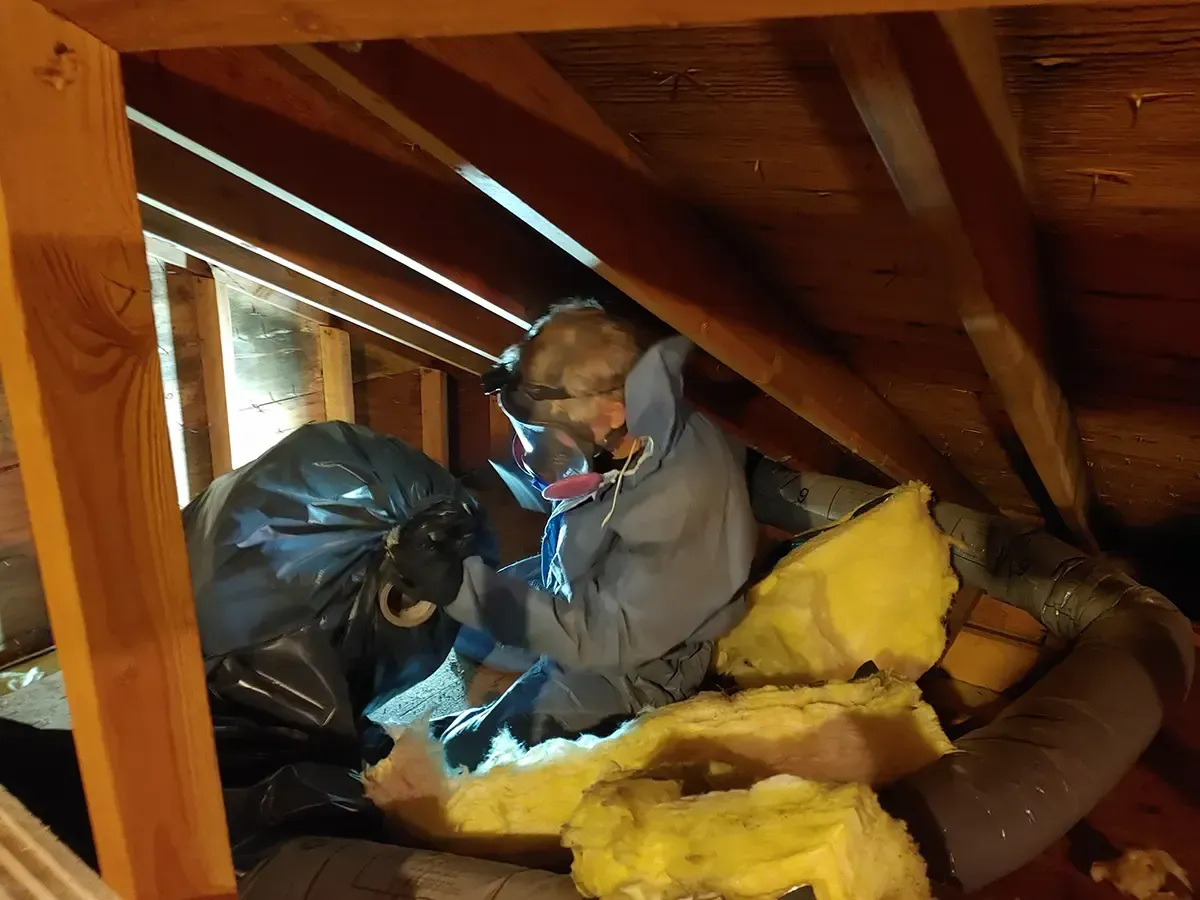
Attic Ductwork Can Carry the Problem into the House
Attic mold becomes more complicated when ducts or air handlers run through the attic. A small area of mold on roof decking is one thing. Moisture near leaky returns, sweating ducts, wet duct wrap, or moldy duct liner is a different concern because the HVAC system can connect the attic to the living space.
This is one reason a homeowner may smell musty air inside the house even when visible mold appears limited to the attic. The hidden danger is movement. Odor, humidity, and attic air can travel through gaps, duct leaks, and pressure imbalances before anyone sees mold in a bedroom or hallway.
| HVAC condition |
Hidden risk |
| Leaky return duct |
Can pull attic air into the system |
| Sweating ductwork |
Adds moisture to the attic |
| Wet duct insulation |
Can hold odor and moisture |
| Contaminated duct liner |
May need replacement rather than simple cleaning |
Damp Wood Can Create Pest-Friendly Conditions
Mold does not cause termites or carpenter ants. The shared issue is moisture. Damp wood can create better conditions for wood-damaging insects, especially when the attic has roof leaks, wet framing, or hidden moisture near insulation and vents.
This matters because pest damage and moisture damage can hide in the same places. A homeowner may treat attic mold as one isolated problem while damp wood continues to attract or support another problem. The hidden danger is overlap, not panic.
- Look for frass, tubes, wood shavings, or insect activity near stained areas
- Check damp roof edges, rafter tails, and insulation voids
- Treat the moisture source before assuming pest treatment alone solves the problem
The Financial Damage May Appear During a Sale
Attic mold can sit unnoticed for years, and then become a major issue during a home inspection. Buyers may not know whether they are seeing surface growth, roof damage, insulation damage, or an active moisture problem. That uncertainty often creates repair requests, credits, documentation questions, and closing delays.
The hidden danger is delayed financial impact. A problem that looked minor while the homeowner lived in the house can become expensive once an inspector, buyer, agent, or insurance company questions it. Clear diagnosis and repair records matter because they show what caused the issue, what was fixed, and whether the attic is now dry.
The Real Danger Is What Mold Reveals
Attic mold should not create panic, but it should change what a homeowner looks for. The visible mold may be the least hidden part of the problem. The more important question is what moisture has already affected before the home gives clearer warning signs.
For Myrtle Beach homeowners, that means looking beyond the surface. The attic should be checked for roof decking damage, wet insulation, duct problems, pest-friendly moisture, and future resale concerns. The smartest response is to find the moisture source, confirm what materials were affected, fix the cause, then clean or remove what was damaged.