When Should Encapsulation Wait Until the Moisture Source Is Fixed?
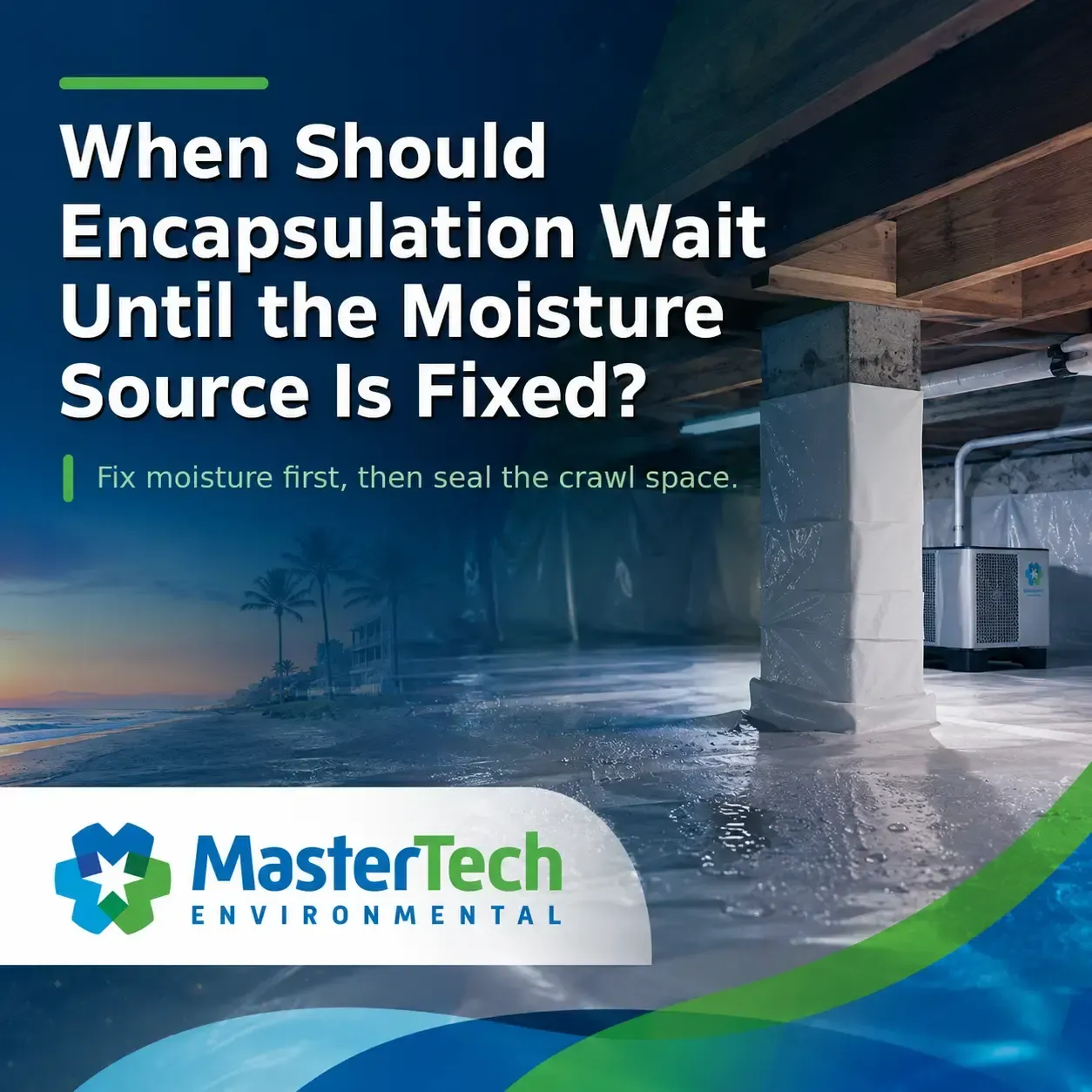
Encapsulation is not a reset button for a wet crawl space. In Myrtle Beach, a sealed liner often seems like the obvious answer to musty odors, damp air, and moisture beneath the home, but a liner only works once the source of the moisture has been corrected. If water is still entering or damp materials remain under the home, the system risks masking the problem rather than controlling it.
Encapsulation should wait until inspection confirms where the moisture starts, what materials were affected, and whether the crawl space is dry enough to seal. When damp framing, staining, odors, or visible growth are present, mold remediation Myrtle Beach services should happen before encapsulation. Hence, the system protects a corrected space instead of hiding an active condition.
Encapsulation Should Wait When Moisture Is Still Active
Encapsulation should wait when the crawl space is still receiving water, producing condensation, or holding elevated moisture in wood, insulation, soil, or masonry. A vapor barrier helps control ground moisture after the space has been corrected. It does not repair the condition keeping framing, insulation, or foundation materials wet.
In coastal South Carolina, active crawl space moisture often stems from drainage issues, plumbing, HVAC condensation, high outdoor humidity, or storm-related water intrusion. These problems do not always leave standing water. Sometimes the proof shows up as odor, rust, staining, damp insulation, or wood moisture.
What to Check before Encapsulation
| Crawl Space Condition | What It Tells You | Why It Matters Before Sealing |
| Damp joists or soft framing | Wood is still holding moisture. | Structural materials should not be closed inside a sealed system while still damp. |
| Musty air under the home | Moisture has affected organic material long enough to create odor. | Odor often returns when the source and affected materials are not addressed first. |
| Wet, fallen, or stained insulation | Insulation has absorbed moisture or hidden dampness against the subfloor. | Covered insulation hides conditions against wood and limits visibility during future inspections. |
| Rusted fasteners, brackets, or duct straps | Humidity or condensation has been recurring over time. | Rust gives physical evidence that the crawl space has not stayed dry. |
| Condensation on ductwork or HVAC equipment | Warm, humid air is contacting cooler surfaces. | Sealing the space before correcting condensation risks continued dampness near wood and insulation. |
| Muddy soil or recurring damp ground | Water is entering through drainage, grading, seepage, or groundwater movement. | A liner should not be used to cover water that still enters the crawl space. |
| Visible growth, staining, or suspicious discoloration | Mold or microbial activity may already be present. | Affected materials should be inspected and handled before encapsulation covers them. |
These signs matter because they indicate how moisture behaves inside the crawl space. The source might be outside drainage, a plumbing issue, HVAC condensation, or materials still holding water from a prior leak or storm. Encapsulation should not begin until the contractor knows what is wet, why it is wet, and whether the affected materials are dry enough to remain.
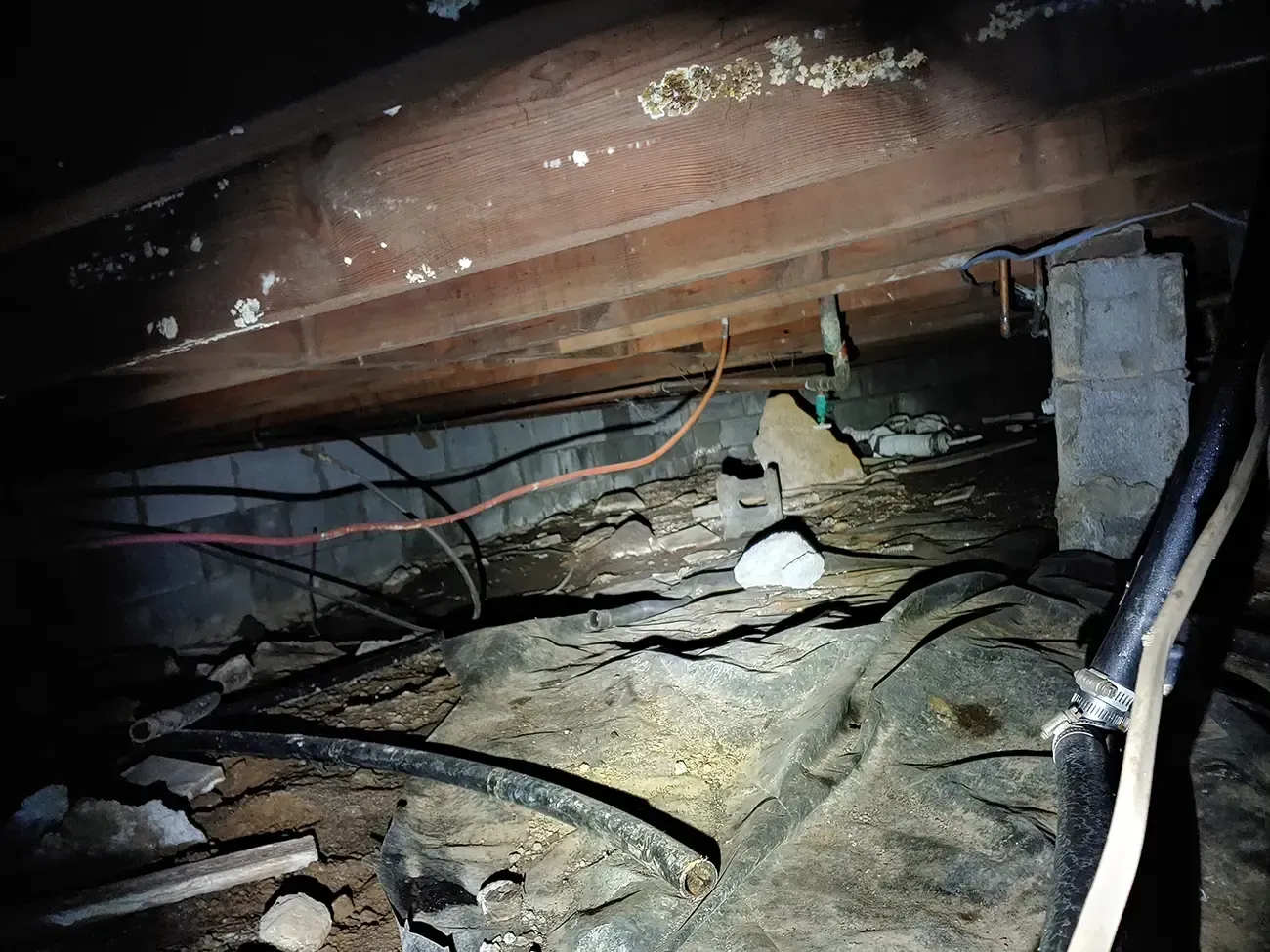
Why Mold Remediation May Need to Happen Before Encapsulation
Encapsulation separates the home from ground moisture. It should not bury an existing mold or moisture problem behind a liner. If mold growth is already present on joists, subflooring, insulation, or other crawl space materials, sealing the area first makes the problem harder to see and harder to correct.
EPA mold guidance is built around a simple principle: moisture control comes first. Mold problems do not resolve through covering alone. The water or humidity source needs correction, and water-damaged materials require proper drying and cleanup before the space is considered stable.
This is where inspection matters. A proper mold inspection Myrtle Beach SC homeowners schedule before encapsulation should look at both conditions at the same time.
| Inspection Question | Why It Matters |
| Is mold or contamination present? | Visible growth, staining, and odor need evaluation before materials are covered. |
| Where is the moisture coming from? | Encapsulation will not perform as intended if water, condensation, or damp materials remain active. |
| Which materials were affected? | Wood, insulation, masonry, and subflooring hold moisture differently and require different handling. |
| Is the space dry enough to seal? | Surface appearance is not enough. Moisture checks help confirm readiness. |
Mold removal Myrtle Beach SC services may be needed before encapsulation when growth is visible, odors persist, or prior water damage was never fully addressed. Remediation helps remove affected materials, clean impacted surfaces, and prepare the crawl space for drying and long-term moisture control.
The concern is not simply mold in one visible spot. The concern is a sealed system that covers the same conditions that allowed growth to begin. When that happens, the crawl space may look improved while humidity, damp materials, or contaminated surfaces still affect the home.
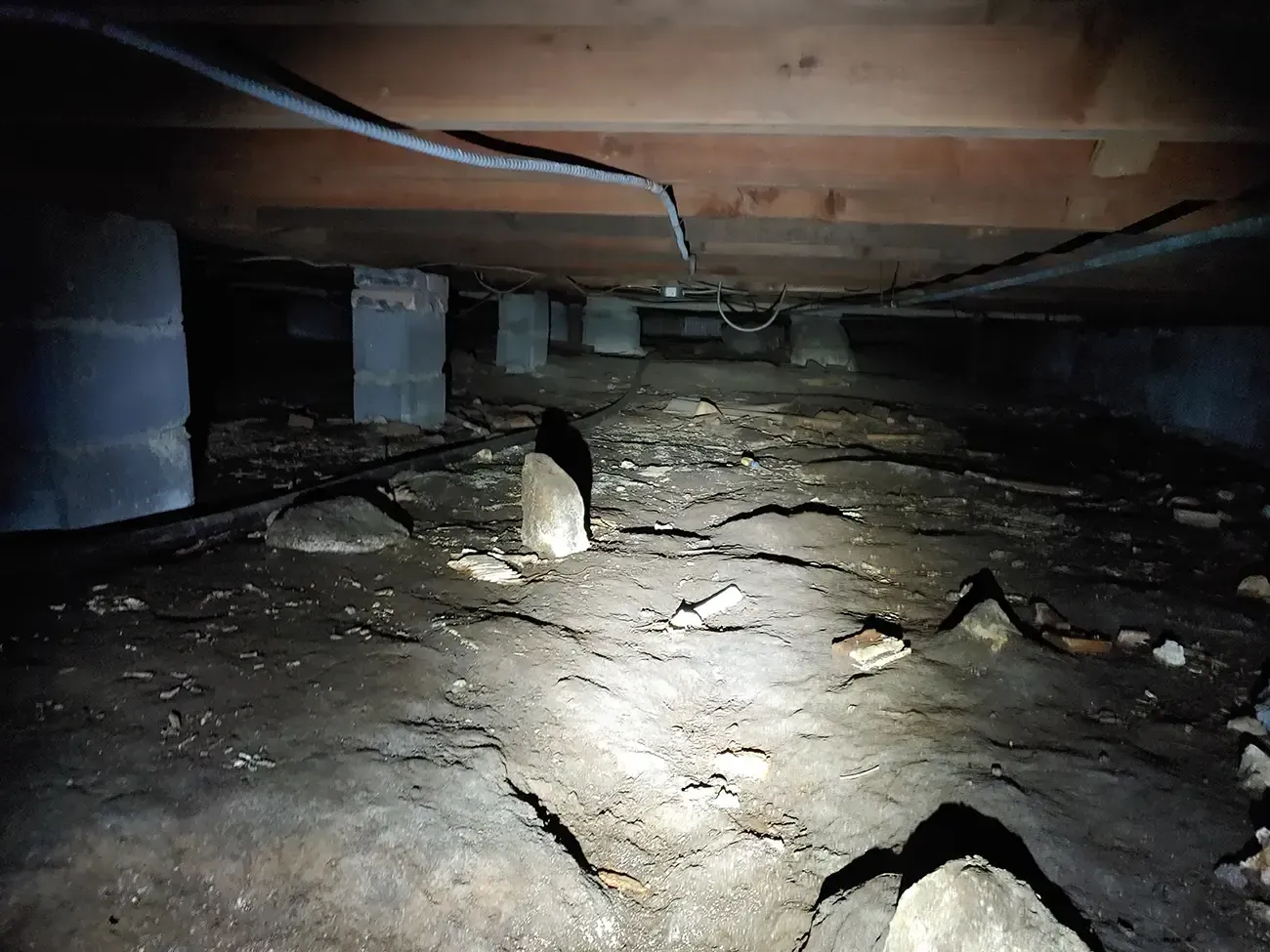
Encapsulation after Water Damage Needs Drying Verification
Encapsulation after water damage repair should wait until drying is confirmed. This matters after plumbing leaks, flooding, foundation seepage, storm intrusion, or repeated dampness under the home. A crawl space may look cleaner after water is removed, but wood framing, insulation, and masonry may retain elevated moisture levels.
EPA guidance notes that water-damaged areas should dry within 24 to 48 hours to help prevent mold growth. That standard matters because crawl spaces often dry slowly. Limited airflow, humid outdoor air, shaded soil, and wet insulation all slow the drying process.
Drying verification provides homeowners with stronger evidence than appearance alone. A contractor should check the materials that are likely to retain moisture, not only the visible ground surface. Joists, beams, subflooring, insulation, foundation walls, and ductwork should all be considered before installing a liner or vapor barrier.
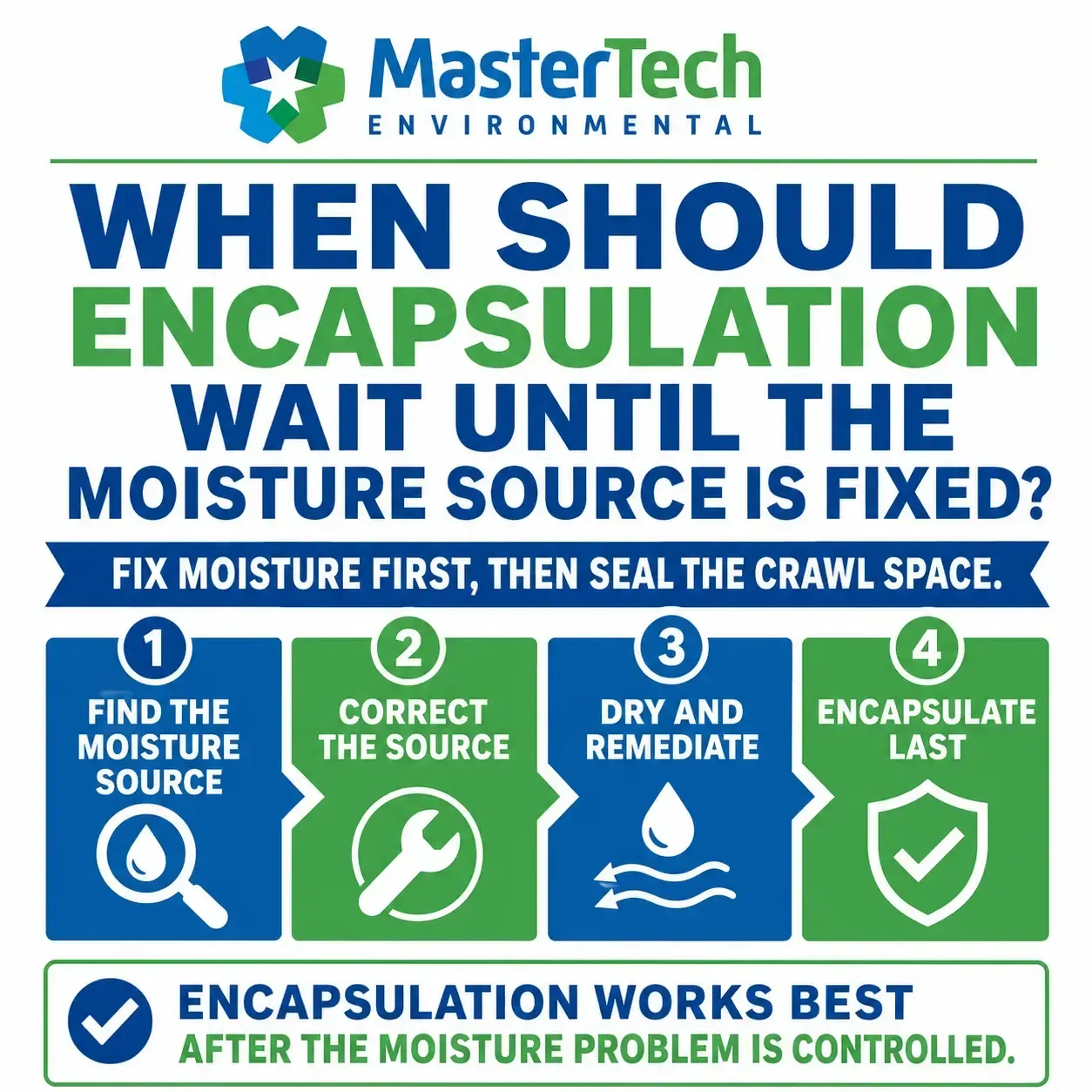
If materials still measure wet, encapsulation should wait. The better sequence is to correct the water source, remove or treat affected materials when needed, dry the crawl space, and then seal the corrected environment.
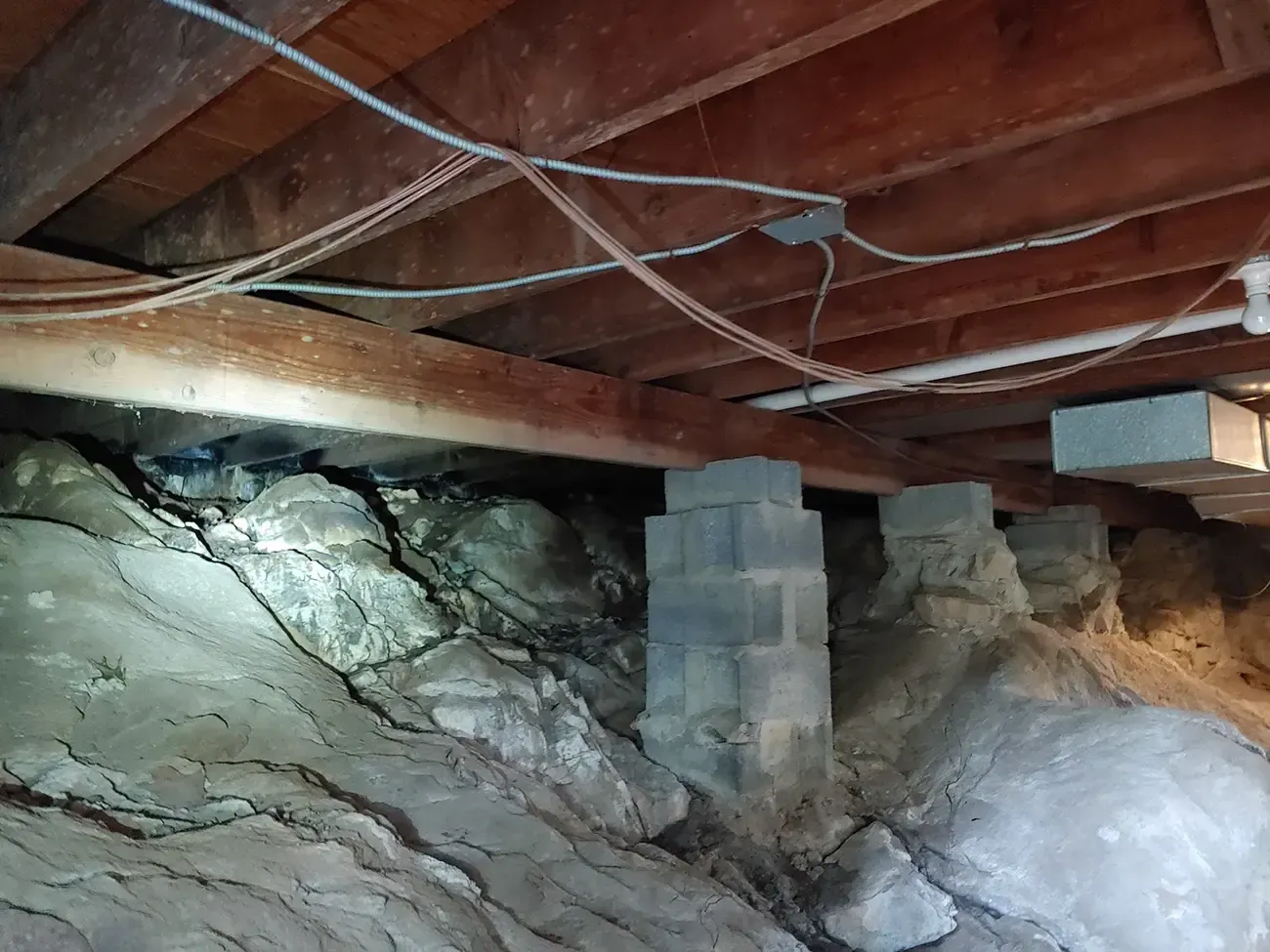
The Right Sequence: Inspect, Fix, Remediate, Dry, Then Encapsulate
When Encapsulation Is Ready to Move Forward
Encapsulation becomes the right next step after the crawl space is clean, dry, and corrected. The moisture source should be identified and addressed. Mold or contamination concerns should be handled. Damp materials should be dried or removed. The contractor should be able to explain why the space is ready to seal.
At that point, encapsulation becomes a protective upgrade. It helps reduce ground moisture, improve humidity control, and protect repaired materials from returning to the same damp conditions. The difference is timing. A sealed crawl space should protect a corrected area, not hide an unresolved one.
Mastertech Environmental Myrtle Beach helps homeowners determine whether a crawl space is ready for encapsulation or whether inspection, drying, or remediation should happen first. That distinction matters because the right fix depends on the condition under the home, not only the desire to install a liner.
Fix the Moisture Source Before Sealing the Crawl Space – SEE OUR GUIDE = link to PDF
Solve Your Mold Problem the Right Way
Encapsulation should wait whenever the condition causing dampness, staining, odor, visible growth, or structural wetness has not been corrected. A liner is not a substitute for moisture control, mold remediation, or drying verification. The right path is to identify the source of the moisture, correct it, address affected materials, and confirm the crawl space is stable enough for a sealed system.
Before approving crawl space encapsulation, schedule a professional moisture and mold inspection with MasterTech Environmental Myrtle Beach. Our team can help determine whether leaks, condensation, groundwater entry, elevated humidity, or mold concerns need attention first. If cleanup or drying is required, the next step should happen before the liner goes down. For trusted guidance on mold remediation Myrtle Beach homeowners can rely on, contact MasterTech Environmental Myrtle Beach before committing to crawl space encapsulation.