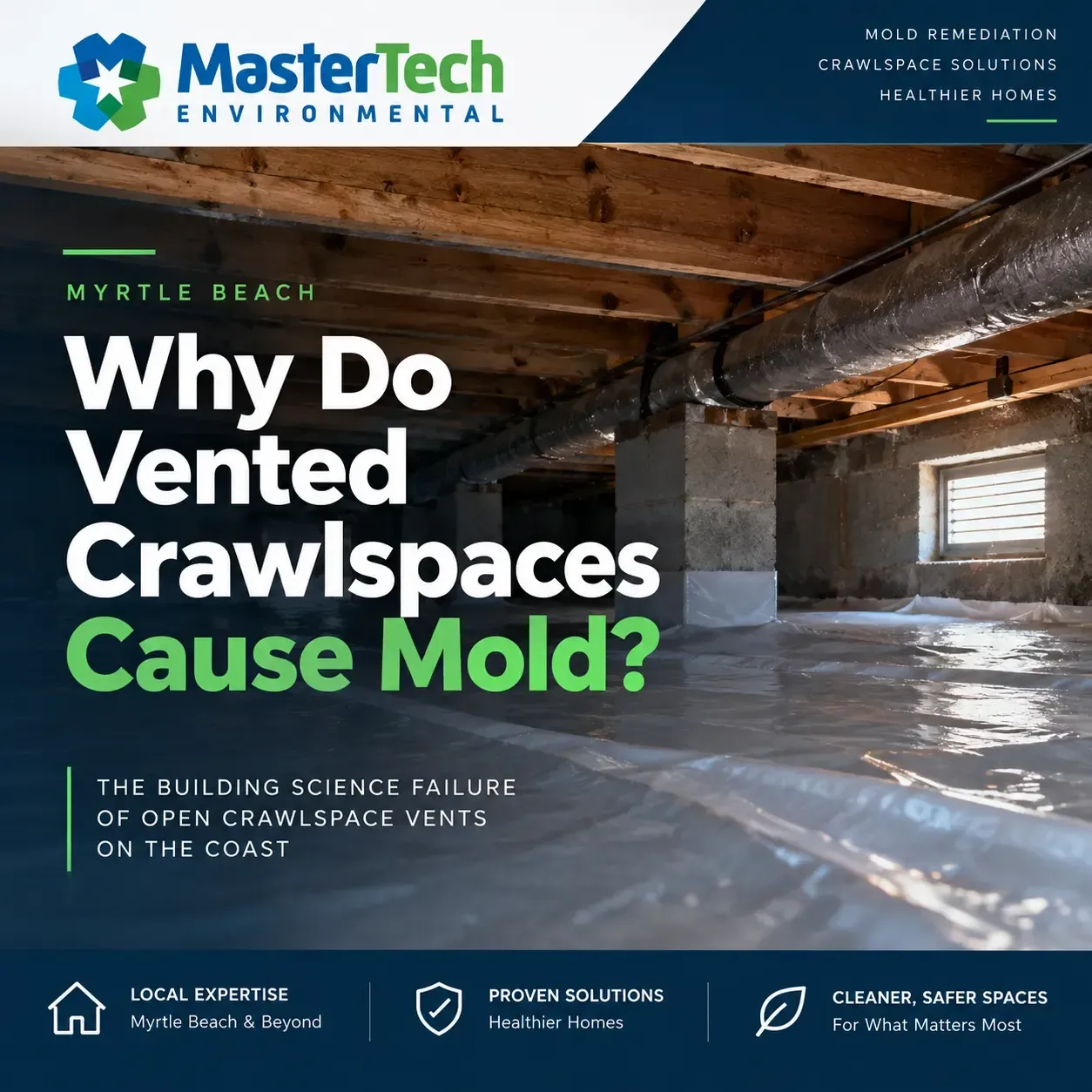
Why a Musty Smell Upstairs Might Start in the Crawl Space below Your Myrtle Beach Home
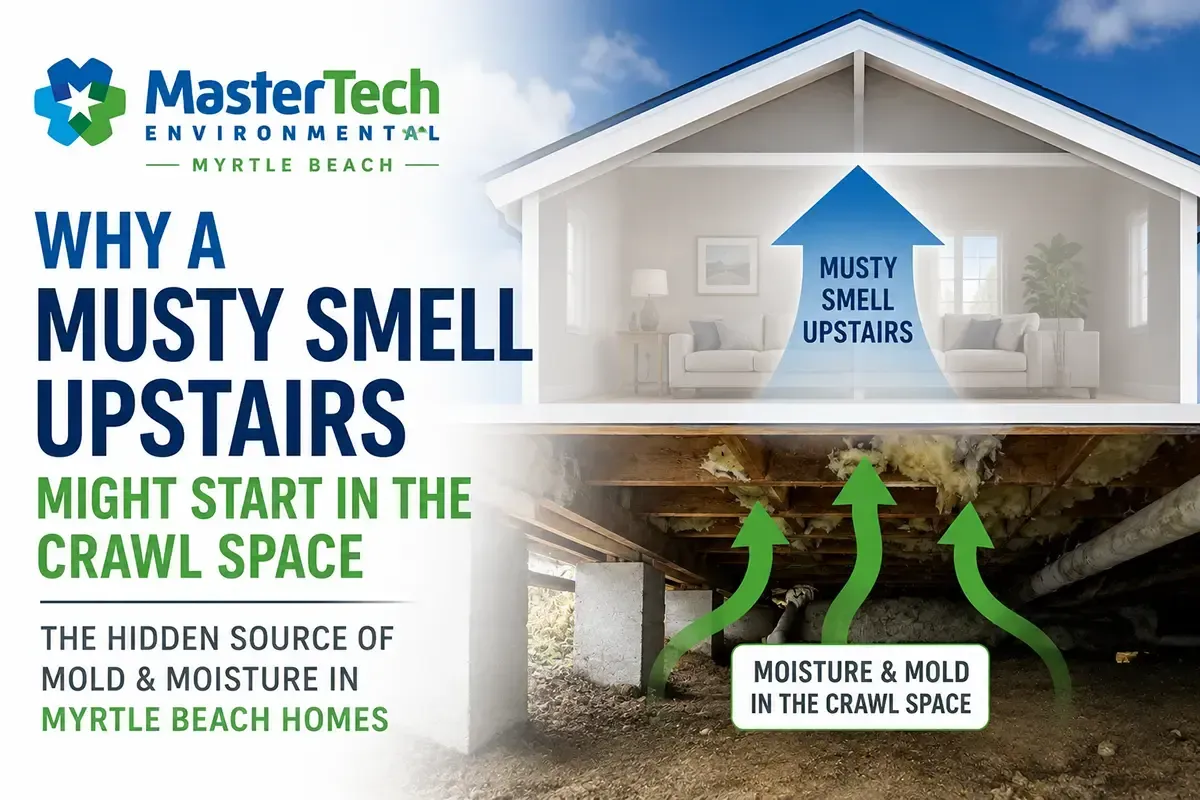
If your house smells damp every time it rains, or one room always feels heavier and more humid than the rest of the home, the problem may not be in the room where you notice it. Many Myrtle Beach homeowners start by cleaning visible spots, replacing air fresheners, or checking bathrooms and windows. Sometimes the real issue is below the floor.
In coastal South Carolina homes, crawl spaces often collect moisture long before visible mold appears upstairs. Humid outdoor air, damp soil, poor circulation, condensation on ductwork, and hidden moisture under the home all create conditions that allow mold to grow quietly. The smell eventually reaches the living space, even when the growth itself stays hidden.
That is why a proper mold inspection Myrtle Beach homeowners can trust should look beyond the visible symptom. The goal is not only to find mold. The goal is to understand why the area became damp enough for mold to grow in the first place.
In many Myrtle Beach homes, musty odors and hidden mold concerns upstairs often stem from moisture and airflow problems in the crawl space below the home.
Why Crawl Spaces in Myrtle Beach Homes Collect Moisture So Easily
Myrtle Beach homes are subject to conditions that naturally create crawl space moisture problems. Coastal humidity stays high for long periods of the year. Heavy rain, saturated soil, storms, and warm temperatures all add moisture around and under the home.
Once that damp air enters the crawl space, the moisture has somewhere to settle. Wood framing, insulation, subfloor materials, and HVAC ductwork often stay cooler than the outdoor air around them. When warm, humid air encounters cooler surfaces, condensation forms.
Most homeowners have seen this same process happen on a cold drink outside during the summer. Water forms on the outside of the glass because warm, humid air touches a colder surface. Crawl spaces experience similar moisture behavior, except it happens under the home, where the moisture often goes unnoticed for long periods.
At MasterTech Myrtle Beach, we know that elevated crawl space humidity, poor air circulation, flooding, seepage, plumbing leaks, and dirt or sand floors releasing moisture vapor all contribute to crawl space mold conditions. Those are not rare situations in coastal homes. They are common moisture patterns inspectors see throughout the Myrtle Beach area.
How Crawl Space Air Reaches the Living Space Above
One of the biggest misconceptions homeowners have is that crawl space air stays below the house. In reality, air moves constantly through small openings around plumbing, wiring, ductwork, framing gaps, and floor penetrations.
If the crawl space air is damp or musty, some of that air often moves upward into the living space.
A homeowner may notice:
- A musty smell near stairs or hallways
- Damp odors that worsen after rain
- Air that feels heavier when the AC runs
- Rooms that smell stale even after cleaning
- Odors strongest near floor vents or lower walls
The smell upstairs does not always mean the mold is upstairs. Sometimes the odor is traveling from below the home through pressure-driven airflow.
Building Science Corporation has written extensively about crawl space moisture problems in southern climates. It explains that humid outdoor air entering through vents in crawl spaces often causes condensation problems, especially around cool air-conditioning ducts and framing materials.
That distinction matters because homeowners often spend money treating the symptom instead of finding the moisture source feeding it.
Why Mold Often Appears After the Moisture Problem Has Been Active for a While
Mold growth rarely starts as a dramatic black patch covering an entire wall. In many homes, the first signs are smaller and easier to dismiss.
The house smells different after rain. A closet feels humid. Flooring near an exterior wall changes slightly. Insulation under the home starts sagging. Wood framing develops dark staining. Someone cleans a small area, but the smell returns weeks later.
The EPA states that indoor mold growth is linked to moisture problems and that cleaning mold without addressing the water issue usually leads to it returning.
That is why recurring odor matters so much during an inspection. Persistent musty smells often suggest the moisture condition itself has never stopped.
This is also why visible mold may not reflect the full scope of the issue. The area where growth becomes visible may be only where the moisture finally had enough time and the right surface conditions to support growth.
What a Crawl Space Mold Inspection Should Actually Look For
A useful inspection does more than confirm whether mold exists. The inspection should explain why the environment became suitable for mold growth.
That means looking at:
- Crawl space humidity levels
- Signs of seepage or standing water
- Condensation on ductwork
- Moisture inside wood framing or insulation
- Air movement between the crawl space and living space
- Areas where odor patterns match moisture conditions
- Conditions supporting future mold growth
Here at MasterTech Myrtle Beach, our crawl space mold inspections include visual assessment, moisture mapping, moisture meter readings, air quality testing, mold testing when needed, and documentation explaining the findings and remediation recommendations.
That process matters because moisture problems are rarely solved by guessing. A room may smell musty while the actual moisture condition sits below the floor, behind insulation, or near HVAC components the homeowner never sees.
| What the homeowner notices | What may actually be happening |
| Musty odor upstairs | Damp crawl space air may be moving upward into the home |
| Smell gets worse after rain | Soil moisture or seepage may be increasing crawl space humidity |
| Mold keeps returning after cleaning | The moisture condition feeding the mold may still be active |
| Floors feel damp or different in certain rooms | Moisture may be affecting subfloor materials or framing below |
| Air feels heavy when the AC runs | Cool ductwork or surfaces may be collecting condensation in humid conditions |
When a Mold Inspection Leads to Remediation
Not every inspection ends with full remediation. Sometimes the inspection identifies elevated humidity, condensation, or moisture conditions before major contamination develops. In other cases, the inspection confirms active mold growth affecting insulation, framing, surfaces, or indoor air quality. When remediation is necessary, the work should address both the contamination and the condition that feeds it. Cleaning visible mold while leaving the moisture problem active usually leads to the same issue returning.
At MasterTech Myrtle Beach, our crawl space remediation plans are designed around the specific conditions found during inspection. That may include contaminated material removal, HEPA filtration, containment, antimicrobial treatment, cleaning, or moisture-control recommendations, depending on the environment and severity of the issue. The important part for the homeowner is understanding that mold problems usually follow moisture patterns. If the moisture persists, the mold concern often persists too.
Why Mold Inspection in Myrtle Beach Homes Should Start Below the Floor
Many homeowners spend months focused on the room where the smell appears because that is the part they experience every day. The harder part is realizing the source may be somewhere they rarely see. In Myrtle Beach homes, crawl spaces often influence the air quality and moisture conditions inside the living space more than homeowners realize. Humid air, condensation, seepage, and airflow below the home can quietly affect flooring, framing, insulation, odors, and indoor comfort long before visible mold becomes obvious upstairs.
For a professional mold inspection in Myrtle Beach, start with the crawl space to identify the source of moisture, odor, and hidden mold risk before any cleanup plan begins. Homeowners should look at the full moisture path, not only the visible symptom, and we help you do that. The goal is to identify where the moisture started, how it is moving through the home, and whether remediation is needed before the issue spreads further.