Can a Mold Inspection Find Mold Behind Walls?
A wall doesn’t have to look dramatic for a homeowner to worry about what’s happening behind it. We’ve seen plenty of Myrtle Beach homes where the surface looked mostly normal, but something still felt off. Maybe there’s a musty smell that’s stronger in one room. Maybe paint keeps bubbling near a baseboard. These details aren’t definitive proof that mold is inside a wall, but they do tell us we need to examine the issue.
A mold inspection Myrtle Beach homeowners schedule for this kind of concern can often identify whether the conditions behind a wall are suspicious. What it can’t always do, at least not without opening materials, is confirm every hidden condition with absolute certainty. That distinction matters. A good inspection will provide a picture of what’s going on from several sources. These include:
- Moisture readings
- Temperature patterns
- The building layout
- A history of the problem
- Clues on surfaces
What an Inspection Can Detect Without Opening the Wall
A non-invasive inspection can detect many of the conditions that make mold behind a wall more likely. When we perform a mold inspection in Myrtle Beach, we don’t just walk around a home searching for black spots. We look for signs of moisture where it shouldn’t be.
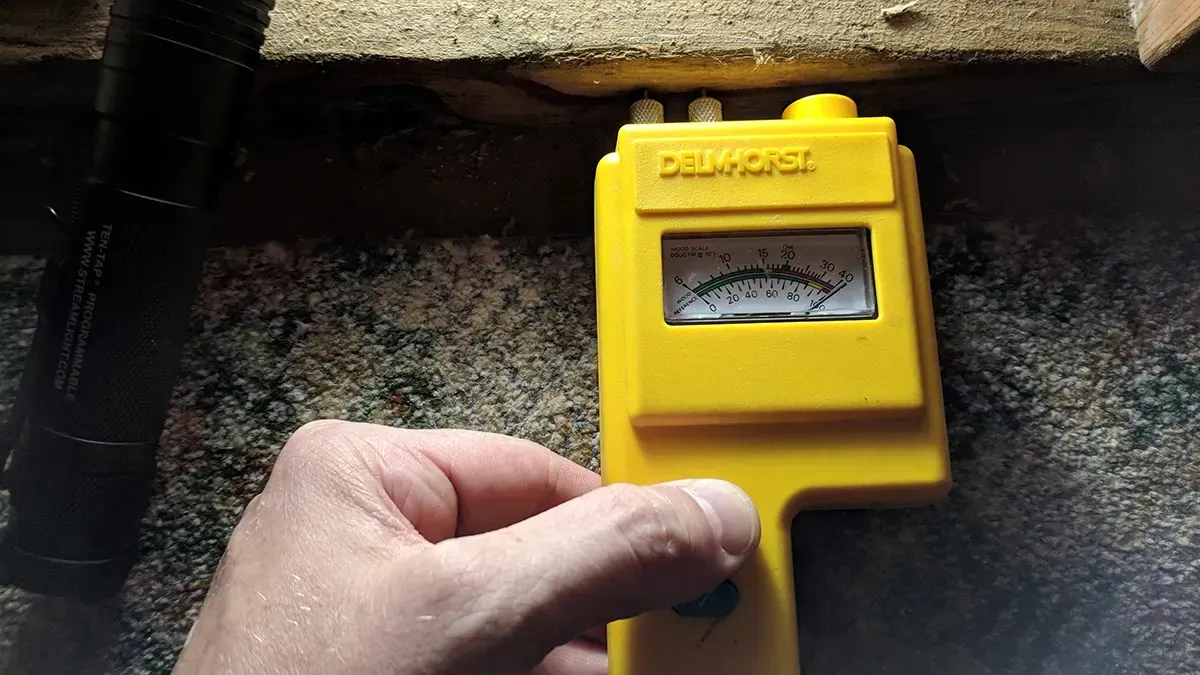
One tool we use is a moisture meter, which can alert us to damp materials. We might compare readings from walls that don’t seem affected with those from walls where we suspect an issue. Drywall near a plumbing line, exterior wall, window, shower, or previous leak area may deserve extra attention if it reads differently from surrounding materials.
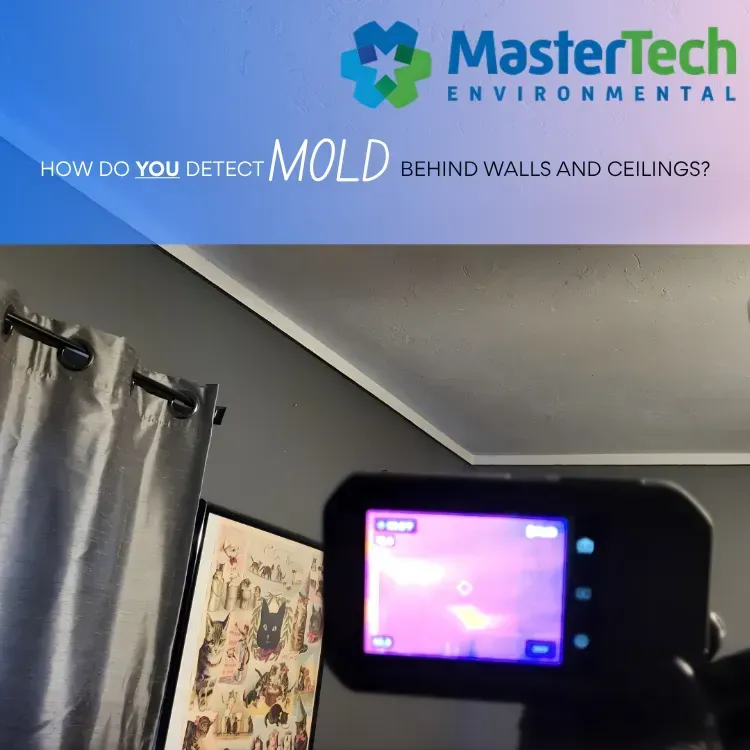
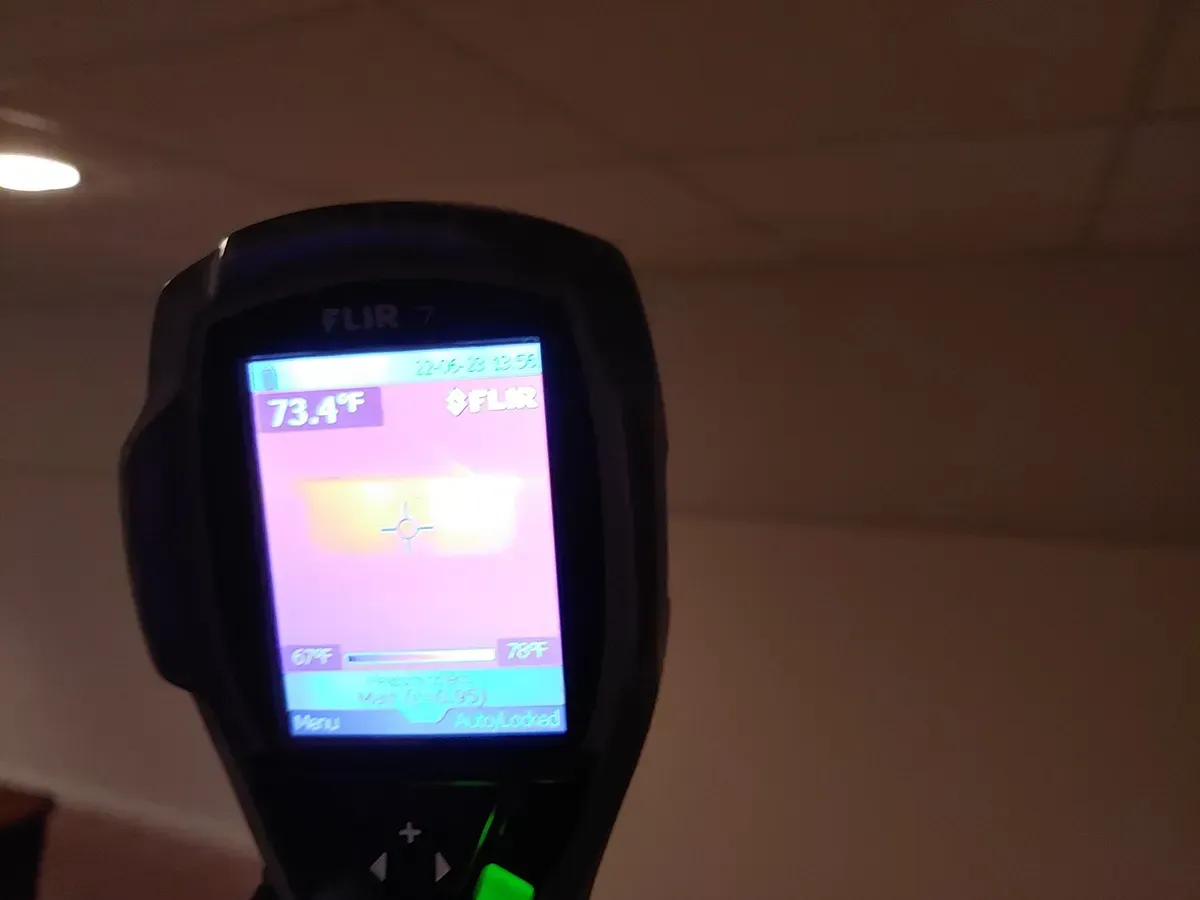
Thermal imaging can also help. A thermal camera doesn’t show mold. It shows temperature differences. Those differences may suggest damp materials, missing insulation, air movement, or another condition that needs more investigation. If a section of wall shows an unusual pattern and the moisture meter supports that finding, the concern becomes stronger.
Odor can be useful, too. If we notice a musty odor near a wall, baseboard or closet, it can give us a clue about where mold might be growing. While smell alone won’t tell us there’s mold behind the wall, it is an important part of the story.
What an Inspection Can Tell Us
Sometimes an inspection can’t honestly say, “Yes, there’s mold behind this wall,” but it can say, “The evidence strongly suggests a concealed moisture or mold condition.” Some of the most telling pieces of evidence include:
- A musty smell that gets stronger along one section of the wall.
- Paint bubbling near the floor.
- Signs of increased moisture in drywall.
- Ventilation or HVAC issues.
When those clues point in the same direction, we’re not guessing from one sign. We’re reading the building. That’s why a mold inspection Myrtle Beach residents rely on should focus on the whole pattern, not just a single tool reading or a single stain.
What an Inspection Cannot Fully Confirm Without Access
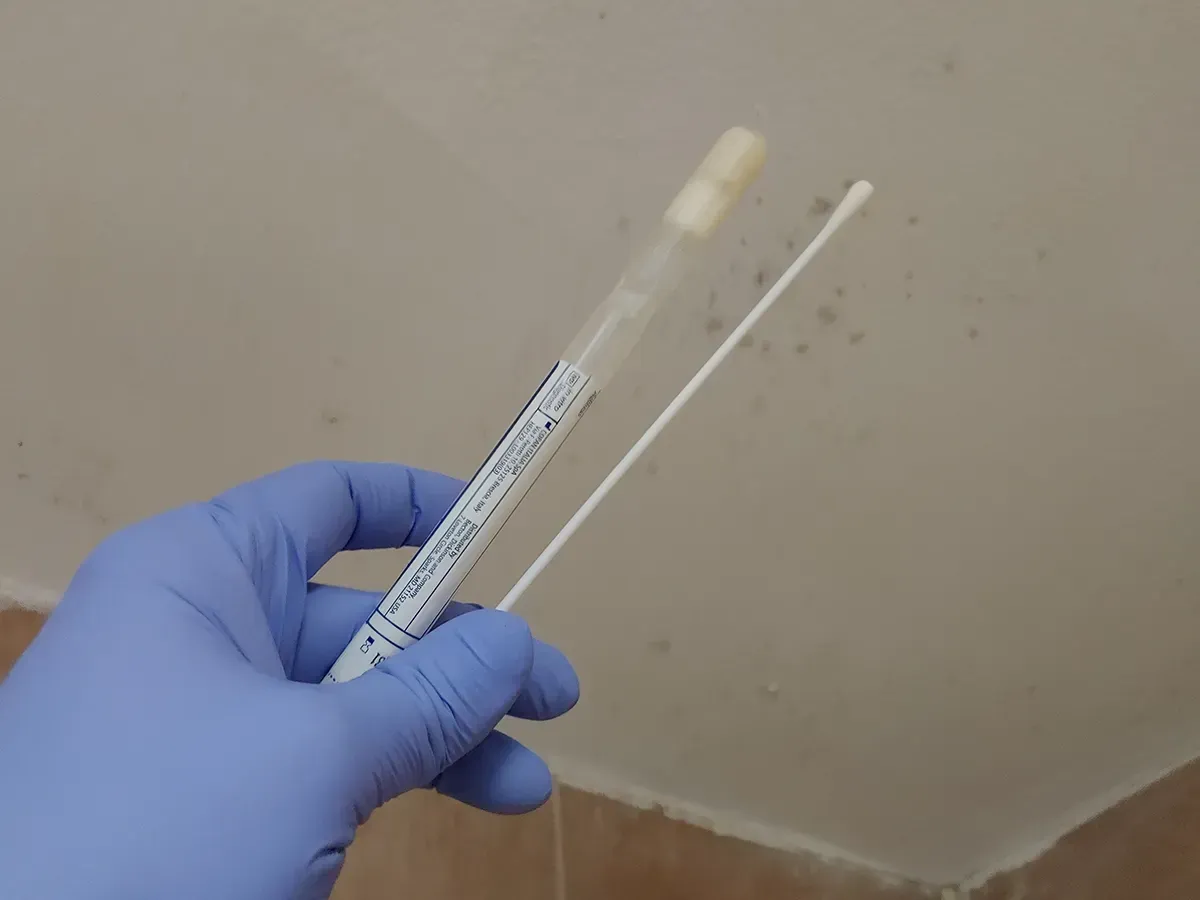
There’s an honest limit to what any non-invasive inspection can confirm. The only way to determine if mold is growing inside a wall cavity, behind insulation, or on the back side of drywall is to open the wall. That doesn’t mean the inspection failed. It means the inspection reached the boundary of what can be determined without invasive access.
Drywall can hide a lot. A surface may look clean while the back side of the material has been wet long enough to support growth. That’s why careful language matters. “Likely,” “suspected,” and “confirmed” don’t mean the same thing. We try to keep those lines clear because homeowners deserve accurate information, not overstatement.
The Tools Don’t “See” Mold, They Find Clues
In addition to an odor assessment and visual inspection, other tools (humidity readings, moisture meters and thermal imaging) help determine whether a wall shows evidence of moisture that could support mold growth.
- Humidity readings tell us if the air inside your home is contributing to moisture.
- A thermal camera helps us locate unusual temperature patterns that may relate to moisture.
- The moisture meter tells us how different materials in your home are responding to humidity.
None of these tools magically identifies mold inside the wall. However, they help us decide whether concealed mold is reasonably suspected and whether the next step should be monitoring, testing, repairs or selective opening.
Clues That Point Behind the Wall Instead of the Surface
Determining whether the problem is just on the surface or inside the wall assembly is one of the most important questions a mold inspection in Myrtle Beach can answer. If you’re seeing bubbling, peeling or blistering paint in a specific area, that’s a sign the moisture is pushing through from behind a wall. Separated baseboards, swollen trim and soft drywall are other indications of a major problem.
We also pay attention to what homeowners tell us. A room that “just feels different” after a leak, a wall that never seems to dry fully, or a spot that’s been painted over more than once can all provide useful context. Homeowners often notice the pattern before they know what it means.
When You DON’T Need Demolition
Many homeowners automatically fear the worst when they see or smell signs of mold. They assume we’ll have to tear out walls throughout the home. But that’s not necessarily the case. There are many times when non-invasive methods can help.
For example, if there are stains and elevated moisture readings, and we can identify the water source, we can recommend steps to correct the moisture problem. A mold inspection in Myrtle Beach will often provide enough information to narrow the scope of the concern, rule out certain causes, or determine what needs to be checked next. That’s valuable because it helps avoid random guessing and unnecessary damage.
When a Wall Opening May Be Necessary
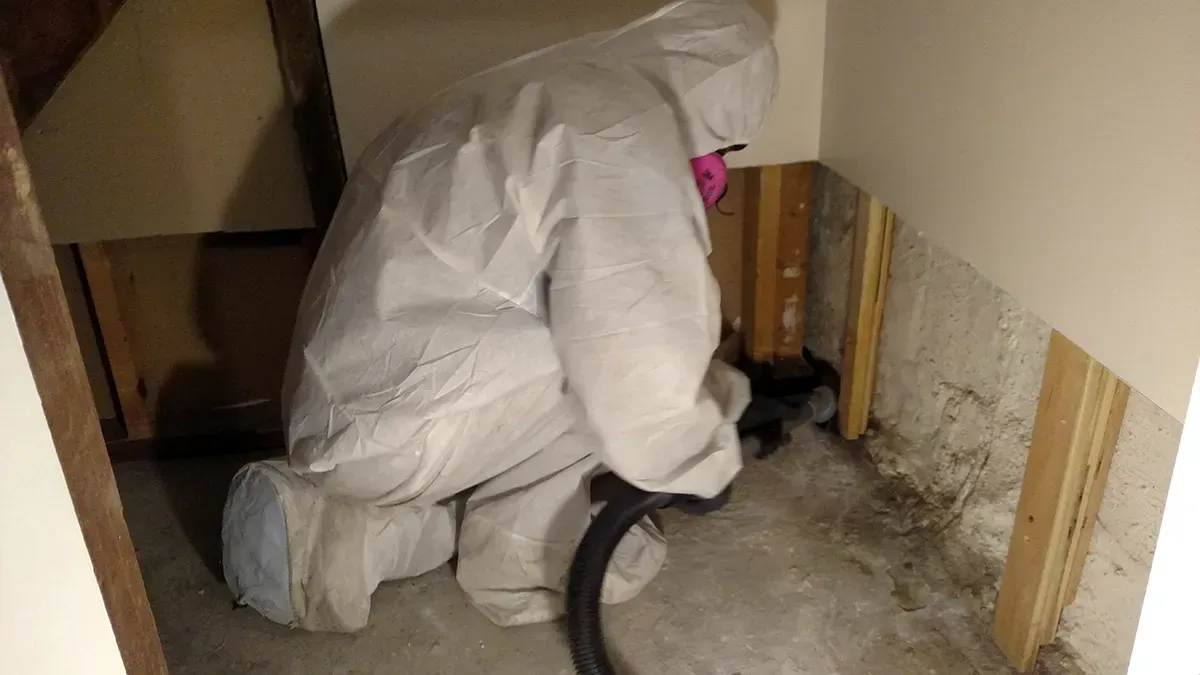
A wall opening may be necessary when the evidence points strongly to a concealed problem, but the condition can’t be confirmed from the outside. Selective access may allow direct inspection of the back side of drywall, framing, insulation, or the wall cavity.
This doesn’t mean tearing apart a whole room. It may mean a controlled opening in a specific area based on the inspection findings. The goal is to confirm what’s there, understand the extent of the issue, and avoid making decisions based only on suspicion.
A Good Inspection Replaces Guesswork With a Clearer Picture
While a mold inspection can find evidence of mold behind walls, sometimes we need to remove material or gain access inside a wall cavity to identify the extent of the problem.
That honesty is part of doing the work correctly. At MasterTech Environmental of Myrtle Beach, we want homeowners to understand what the inspection shows, what it doesn't show, and why the next step makes sense. A mold inspection in Myrtle Beach should reduce confusion, not add to it.