Can Mold in an Attic Affect the Air in Your Home?
Many homeowners assume that mold in the attic is isolated from the rest of the house. The attic feels separate from the living space, and most people rarely spend time there. Because of that, it is easy to think that mold growing on roof sheathing or rafters should remain confined to the attic itself.
But the real issue is not where the mold is located. The real issue is whether air from the attic can reach the rooms where people live. In many homes, the answer is yes, which is one reason attic mold remediation in Myrtle Beach can matter even when the attic is not used as a living space.
Homes constantly move air through small openings, pressure differences, and mechanical systems. When those airflow pathways connect the attic and the living space below, attic conditions can influence the air inside the home. Understanding how that connection works is the key to understanding why attic mold sometimes matters beyond the attic itself.
Mold in the Attic Is Often Part of a Larger Air System
An attic may look like a separate part of the house, but it is still connected to the rest of the building through how air moves within the structure. Buildings function as systems of connected spaces, not isolated compartments. When pressure differences occur between those spaces, air moves through the available pathways.
Researchers who study building airflow refer to this movement as interzonal air exchange, meaning air movement between different zones of a structure. Models developed by the National Institute of Standards and Technology have repeatedly shown that air exchange between attics and living spaces occurs whenever openings exist between those areas. That matters here because mold does not need to spread through the ceiling to affect the house physically. If attic air can move into the home, anything carried in that air can move with it.
Once that possibility is understood, the next step is identifying where those pathways usually occur.
Air Leaks in the Ceiling Can Connect the Attic to the Living Space
The most common connection between the attic and the home is the ceiling plane, the structural layer that separates the attic from the rooms below. From inside the house, the ceiling looks continuous and solid, but in most homes, it contains numerous small openings created during construction. These openings may be small, but across an entire house, they can add up to meaningful air leakage.
These gaps often appear wherever electrical wiring, plumbing, ductwork, or mechanical systems pass through the ceiling. Over time, additional leakage points can form as materials shrink, settle, or shift slightly. Even a house that looks well finished from below may still allow attic air to move through hidden penetrations.

Common examples include:
- Recessed lighting fixtures installed through the ceiling
- Attic access hatches or pull-down stairs
- Plumbing pipes passing between floors
- Electrical wiring penetrations
- Duct chases connecting HVAC systems
- Framing gaps where walls meet attic floor framing
Each opening may seem minor on its own. Together, though, they can create a network of pathways between the attic and the living space. The ASHRAE Handbook identifies ceiling penetrations and attic bypasses as common air leakage pathways in residential buildings, which aligns with findings from many field building investigations.
But a pathway alone does not move air. Something still has to drive that air through the openings.
Pressure Differences Can Pull Attic Air into the Home
Air moves through building leaks due to pressure differences, which occur all the time during normal household activity. A house does not stay in one perfectly balanced condition all day. Instead, it constantly shifts as equipment turns on, wind hits the structure, and indoor and outdoor conditions change.
Many common appliances remove air from the home during operation. When that happens, replacement air has to come from somewhere. If small openings exist between the attic and the living space, the attic can become one of the places the house pulls that replacement air from.
Several everyday systems can create this effect:
- Bathroom exhaust fans venting moisture outdoors
- Kitchen range hoods removing cooking air
- Clothes dryers exhausting air outside
- HVAC equipment creating temporary pressure imbalances
- Wind pressure acting on the exterior of the house
The U.S. Department of Energy explains that when the pressure inside a home drops relative to that of nearby spaces, air is pulled through cracks and openings in the building enclosure. If the ceiling plane contains leaks, attic air can be drawn through those hidden openings and into the rooms below. That process is usually invisible, but it can happen repeatedly over time.
In some homes, however, there is an even more direct route between attic air and indoor air.
HVAC Systems Can Create a More Direct Pathway
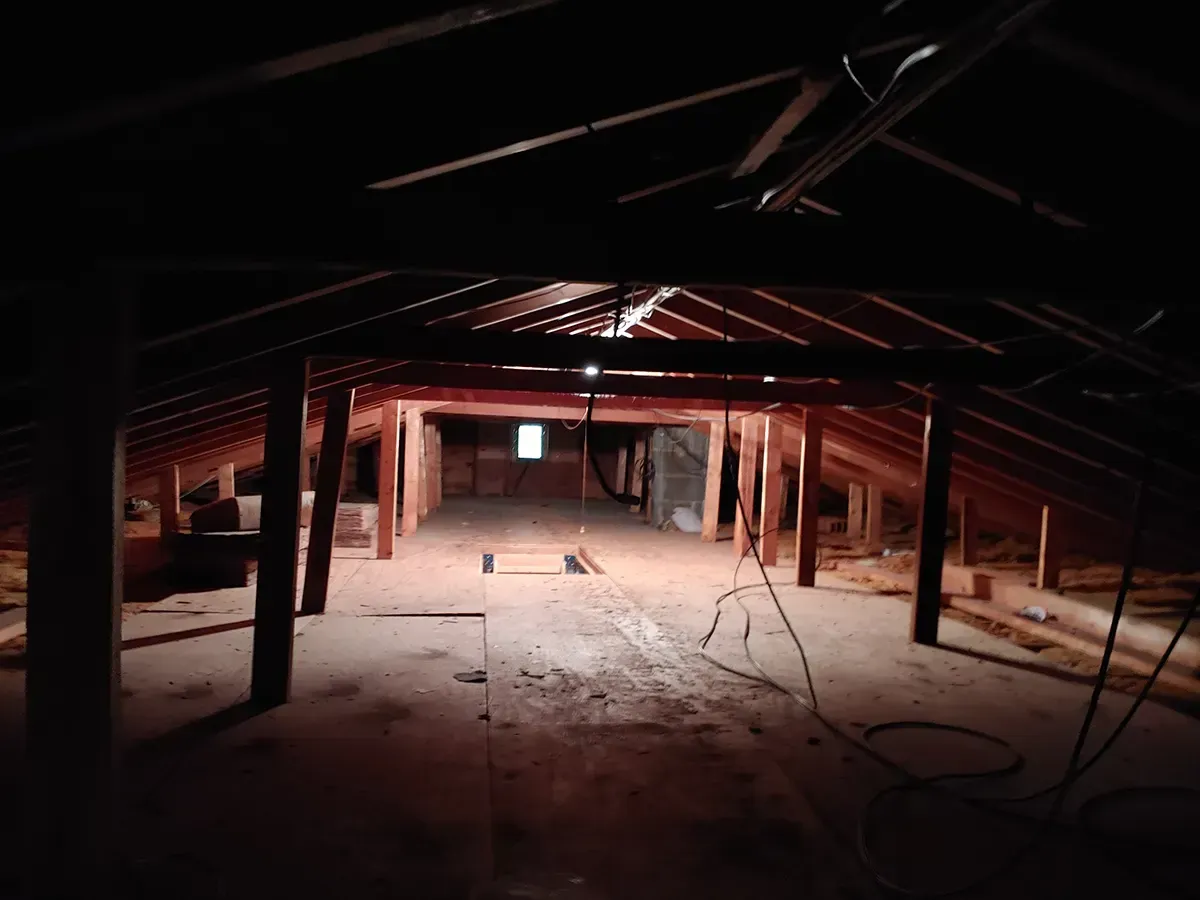
In many homes along the South Carolina coast, heating and cooling equipment is located in the attic. This arrangement is common in warm climates, but it can unintentionally create a stronger connection between attic air and the living space. Instead of air moving only through small ceiling leaks, the mechanical system itself can become part of the pathway.
The most important issue is leakage in HVAC ductwork, especially on the return side of the system. Return ducts pull air from the home back toward the air handler so that it can be cooled or heated again. If return ducts leak in the attic, they can draw surrounding attic air directly into the system.
ASHRAE explains that return leaks in unconditioned spaces allow nearby air to enter the HVAC system before it reaches the air handler. If the leak is in the attic, the surrounding air being pulled in is attic air. Once that air enters the duct network, it can be redistributed through supply vents into other parts of the house. That is one reason attic mold remediation in Myrtle Beach is not just about what is visible on the roof deck or rafters, but also about how the house and HVAC system are functioning together.
Understanding that route leads to another important question. If attic air reaches the living space, what can that air actually carry with it?
Air Movement Can Release Mold Particles
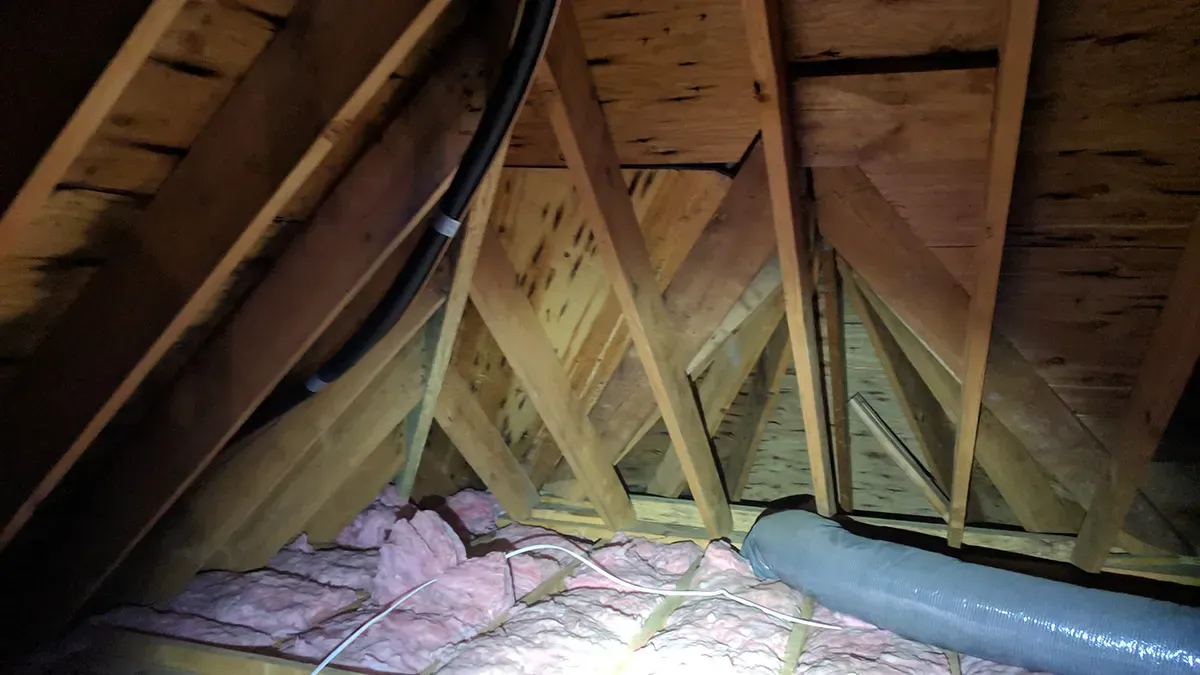
For attic mold to affect indoor air quality, particles from contaminated materials must first become airborne. Mold colonies grow on surfaces such as wood fibers, settled dust, insulation particles, and other organic material commonly found in attics. Once mold is present on those materials, airflow across the surface can disturb microscopic fragments and spores.
When those particles become airborne, they move with surrounding air currents until they settle or are captured by filtration. Laboratory studies examining fungal particle release have shown that airflow across contaminated materials increases the number of particles entering the air stream. That does not mean attic mold constantly releases material into the house, but it does show why airflow pathways matter so much.
If air moves through a contaminated attic and then continues into connected parts of the house, it can carry those particles along with it. At that point, the issue is no longer whether someone goes into the attic. The issue is whether the house is pulling attic air into the living space.
Why It Is Difficult to Judge without Inspection
From a homeowner’s perspective, most of the pathways described above are invisible. Ceiling leaks may be buried beneath insulation. Duct leakage may be hidden within attic insulation or mechanical chases. Pressure imbalances may occur only when certain equipment is operating, so the airflow pattern can change throughout the day.
That is why casual observation often does not answer the real question. A house can look normal from inside while still allowing attic air to move into occupied rooms. Diagnostic tools such as blower door testing and duct leakage testing are often used to identify these hidden pathways and show where air is actually moving.
Mold in an attic does not automatically mean the rest of the home is affected. At the same time, it does not guarantee that the attic is isolated either. For homeowners trying to determine whether attic conditions are affecting the house below, attic mold remediation in Myrtle Beach often starts with identifying the source of contamination and the pathways that allow attic air to reach the living space.