Does Homeowners Insurance Cover Mold Remediation in Myrtle Beach, SC?
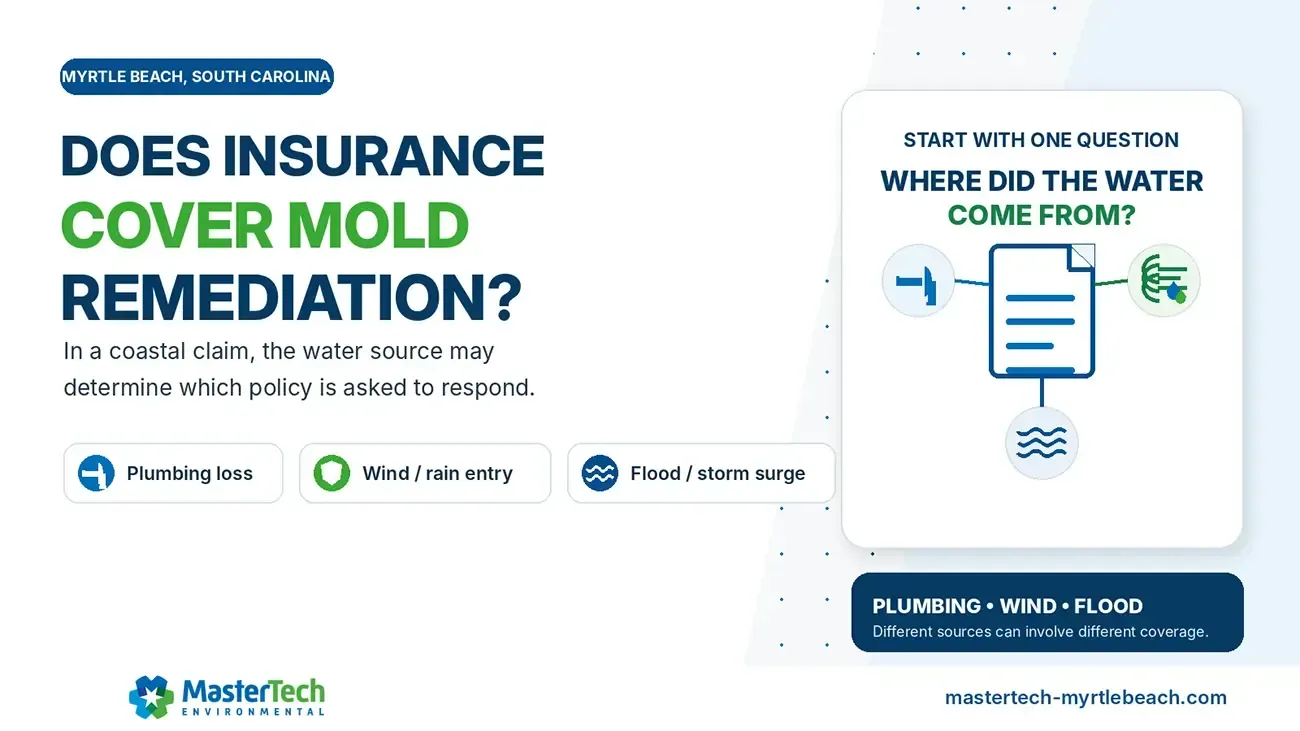
Finding mold in your Myrtle Beach home usually brings the cost question very quickly. Once you know that a mold inspection in Myrtle Beach or mold remediation may be necessary, you naturally want to know whether homeowners insurance can reduce how much of the project you have to pay yourself. The answer is sometimes, but the source of the water matters more than the presence of mold alone. In a coastal market such as Myrtle Beach, that distinction is especially important because an interior plumbing leak and storm-related flooding are not necessarily handled under the same insurance coverage.
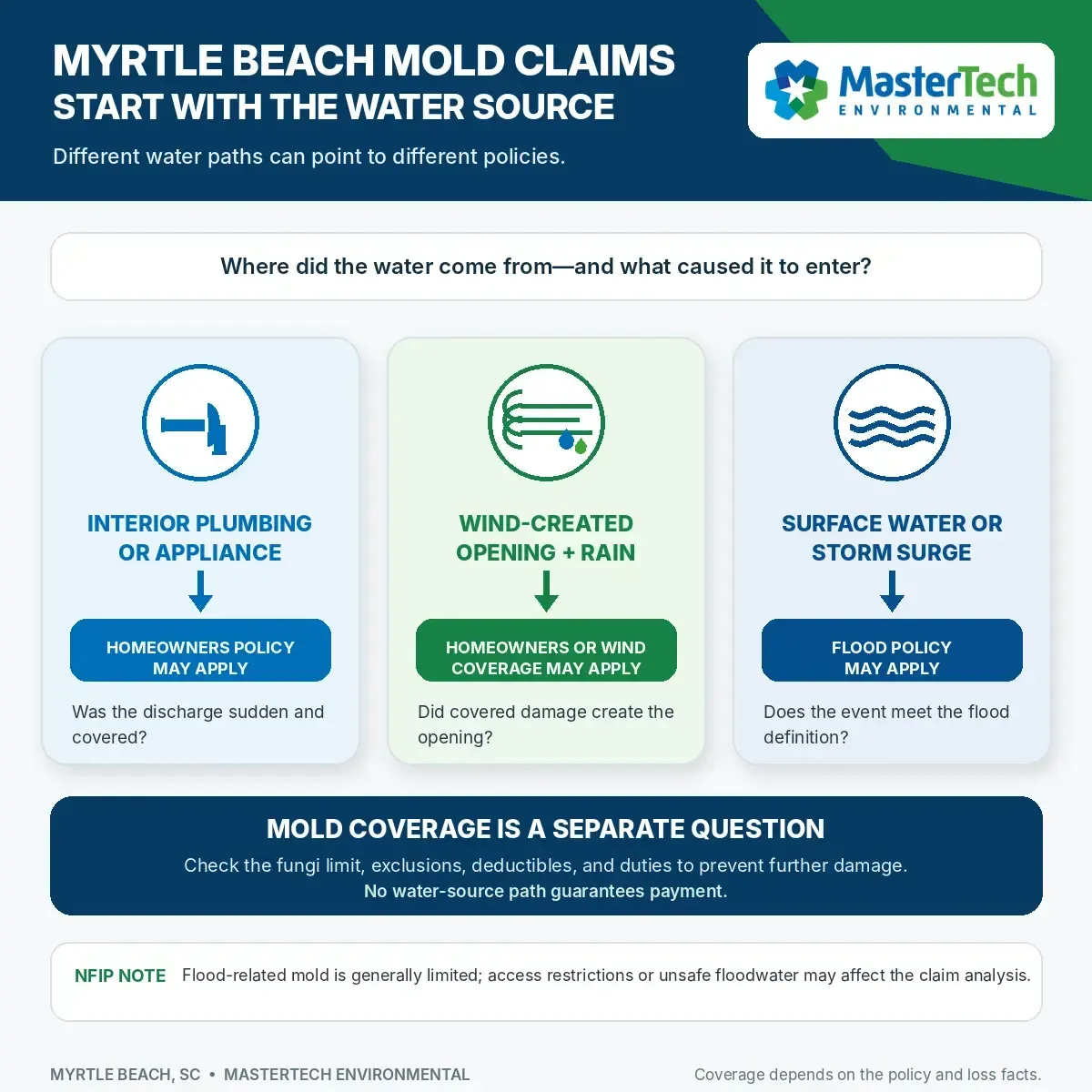
Homeowners insurance may help with mold remediation when the mold developed directly from a covered loss and the policy includes applicable mold or fungi coverage. Coverage may be more limited or unavailable when the moisture came from a long-term leak, deterioration, persistent humidity, flooding, or another excluded condition. Even when the original water damage is covered, the mold-related portion of the project may have its own limit. The goal is therefore to identify the water source first, then determine which mold coverage applies.
When Homeowners Insurance May Help
A claim may have a stronger basis when the mold developed after a sudden event covered by the homeowners policy. A plumbing line that unexpectedly ruptures or an appliance that suddenly releases water presents a different insurance question from a moisture condition that has been building for months. A covered event that damages the structure and allows rain inside may also create a potentially covered loss. The insurer still has to review the individual policy, so none of these examples guarantees reimbursement.
Examples can include:
- A plumbing supply line suddenly ruptures.
- An appliance, such as a water heater or washing machine, unexpectedly releases water.
- A sink, tub, or toilet suddenly overflows.
- A covered event damages the structure and allows rain to enter.
- Water from a covered fire loss leaves building materials wet.
Even when the original water event is covered, the policy may apply a separate mold or fungi limit to the remediation portion of the project. That means the insurer may distinguish between materials damaged directly by water and additional work required due to mold development. A covered loss can therefore result in some insurance payment without necessarily covering every mold-related expense.
When Mold Coverage May Be Limited
The coverage question becomes more difficult when the moisture developed gradually. Repeated roof leakage, crawlspace moisture, condensation, persistent humidity, or seepage through deteriorated materials may be treated differently from sudden accidental water damage. Policies commonly contain exclusions or limitations involving maintenance, deterioration, repeated seepage, or mold itself. The insurer may look at how long the condition existed and whether the homeowner could reasonably have known about it.
For Myrtle Beach homeowners, flooding is the other major distinction worth understanding. Standard homeowners insurance usually doesn't cover flood damage, so mold that follows storm surge, rising surface water, or another qualifying flood may need to be evaluated under separate flood insurance. That does not require turning every mold claim into a detailed flood-insurance analysis. It simply means that if water entered the home from outside, the homeowner should not assume the standard homeowners policy will respond.
South Carolina's Department of Insurance specifically advises consumers that standard homeowners insurance typically does not cover flood damage. For a coastal homeowner, the key state-specific point is to determine whether the mold resulted from an interior homeowners loss or a flood loss before trying to understand what insurance may pay.
What about Mold after a Flood?
Flood-related mold is generally handled under the flood policy rather than the homeowners policy. Under National Flood Insurance Program guidance, avoidable mold damage is generally not covered when reasonable cleanup and drying could have prevented it. However, circumstances may matter if homeowners could not safely access the property due to standing floodwater, official restrictions, or other hazards.
The useful takeaway is simple: flood-related mold should not automatically be treated as covered or excluded without looking at the flood policy and what happened after the event. If a flood affects your Myrtle Beach property, report the loss promptly and document any conditions that prevented safe cleanup. You do not need to become an expert on NFIP mold rules; you need to give the flood carrier an accurate record of what happened and when.
Even Covered Mold May Have a Separate Limit
Once the correct policy has been identified, the insurer may still separate the original water damage from the mold-related portion of the project. Direct damage to drywall, flooring, cabinetry, or other materials may be evaluated differently from damage requiring additional demolition, removal, testing, or replacement due to mold development. Mold or fungi coverage can also have its own limit.
That means neither extreme is useful. A covered plumbing or storm loss does not guarantee that all mold-related expenses will be paid, but a mold limit does not necessarily mean the entire property-damage claim is capped at that amount. The carrier needs to explain how each part of the loss is being classified under the applicable policy.
What to Ask Your Insurance Company
For Myrtle Beach homeowners, the first question should be which policy is actually responding to the water loss. Once that is clear, the mold-related questions become much easier to answer.
Ask:
- What caused the water loss according to the claim?
- Is the loss being handled under homeowners insurance or flood insurance?
- Does the applicable policy include mold or fungi coverage?
- Is there a separate mold limit?
- Which remediation expenses count against that limit?
- What deductible applies?
Those questions keep the conversation centered on the specific loss rather than turning it into a general discussion about hurricanes, flooding, or insurance law. They also help the homeowner understand whether the original property damage and the mold-related expenses are being evaluated separately.
Will Insurance Pay for Mold Remediation in Myrtle Beach?
Insurance may help pay for mold remediation in Myrtle Beach when the mold developed directly from a covered loss and the applicable policy includes mold or fungi coverage. The biggest local distinction is determining whether the water came from a homeowner's loss, such as interior plumbing, or from flooding that may fall under separate flood insurance. If mold develops after either type of water event, MasterTech Environmental of Myrtle Beach can evaluate the remediation work that may be needed. At the same time, the appropriate carrier makes its coverage decision. We cannot promise what an insurer will pay, but we can provide a clear understanding of the work required to address the mold properly. Qualifying remediation work is backed by our five-year mold-free warranty according to its written terms. Contact MasterTech Environmental of Myrtle Beach if you need help addressing a mold problem while you work through the insurance side of the loss.
*This article provides general consumer information, not legal advice or a determination of insurance coverage. Coverage depends on the individual policy, endorsements, exclusions, applicable law, and facts of the loss.