Can My Myrtle Beach Business Stay Open During Mold Remediation?
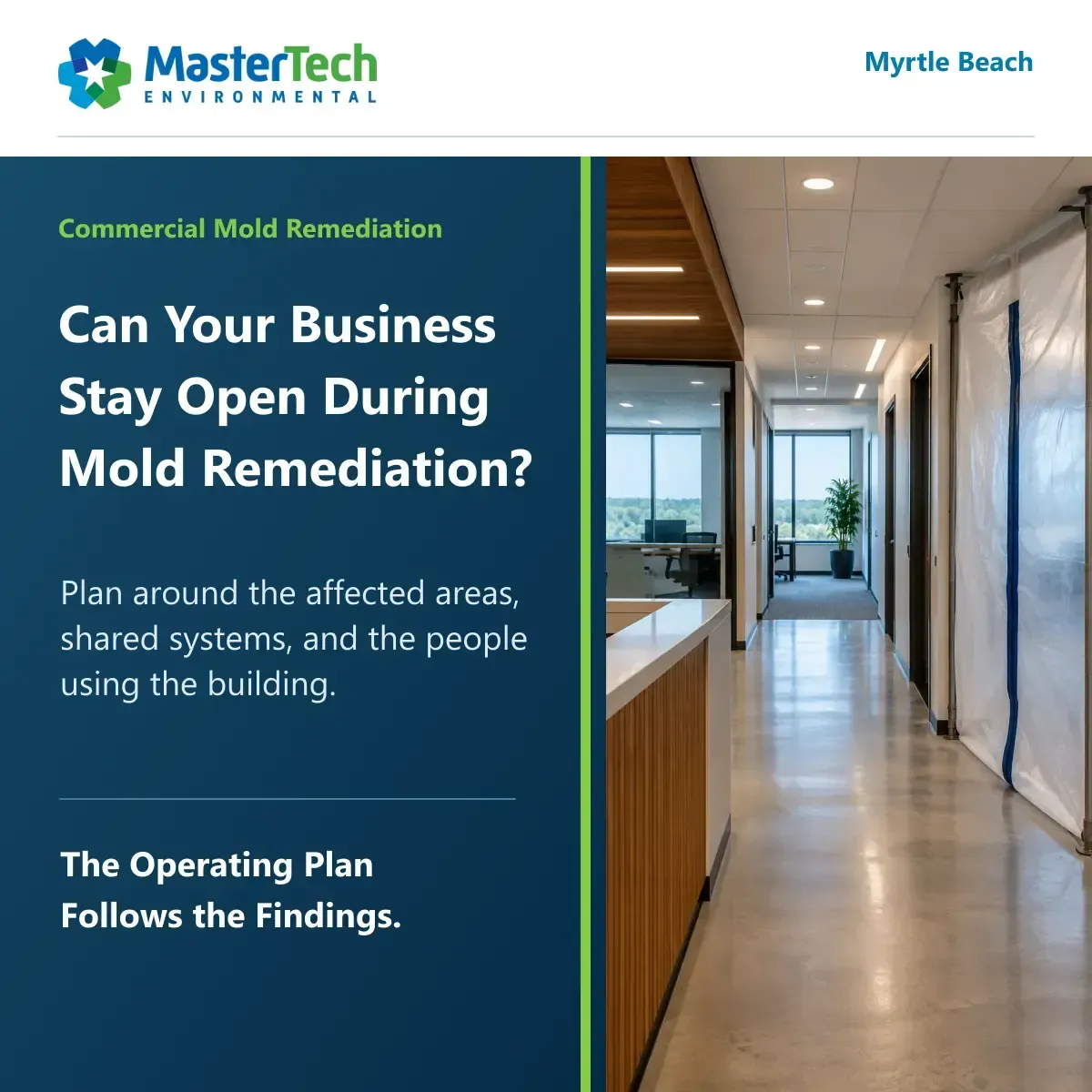
Your business may be able to use part of its building during mold remediation in Myrtle Beach, but we can't promise it until we assess the conditions. The affected areas, the proposed work, building-system connections, and the people using the property all matter. At MasterTech Environmental of Myrtle Beach, we provide commercial mold inspection and remediation. Bring your operational concerns to the first discussion so we can consider the proposed cleanup alongside how your building works.
For management, the decision is more specific than open or closed. You might need a reception area when a storage room isn't available, or a department might be able to work elsewhere. Those arrangements require review; a room that looks separate on a floor plan may share a corridor or ventilation system with occupied areas. Some projects may require temporary relocation of part or all the workforce. Build the plan around the findings rather than a preferred answer.
Start With the Routes People Use Every Day
Mold Remediation Myrtle Beach begins by understanding how the space is used. A simple floor plan is a useful starting point. Mark areas of concern, entrances, shared corridors, and rooms that must be available for specific tasks. Then explain movements a visitor wouldn't notice, such as early deliveries, cleaning crews, or staff collecting supplies. We can discuss mold-related conditions more usefully once you identify those operating constraints before scheduling work.
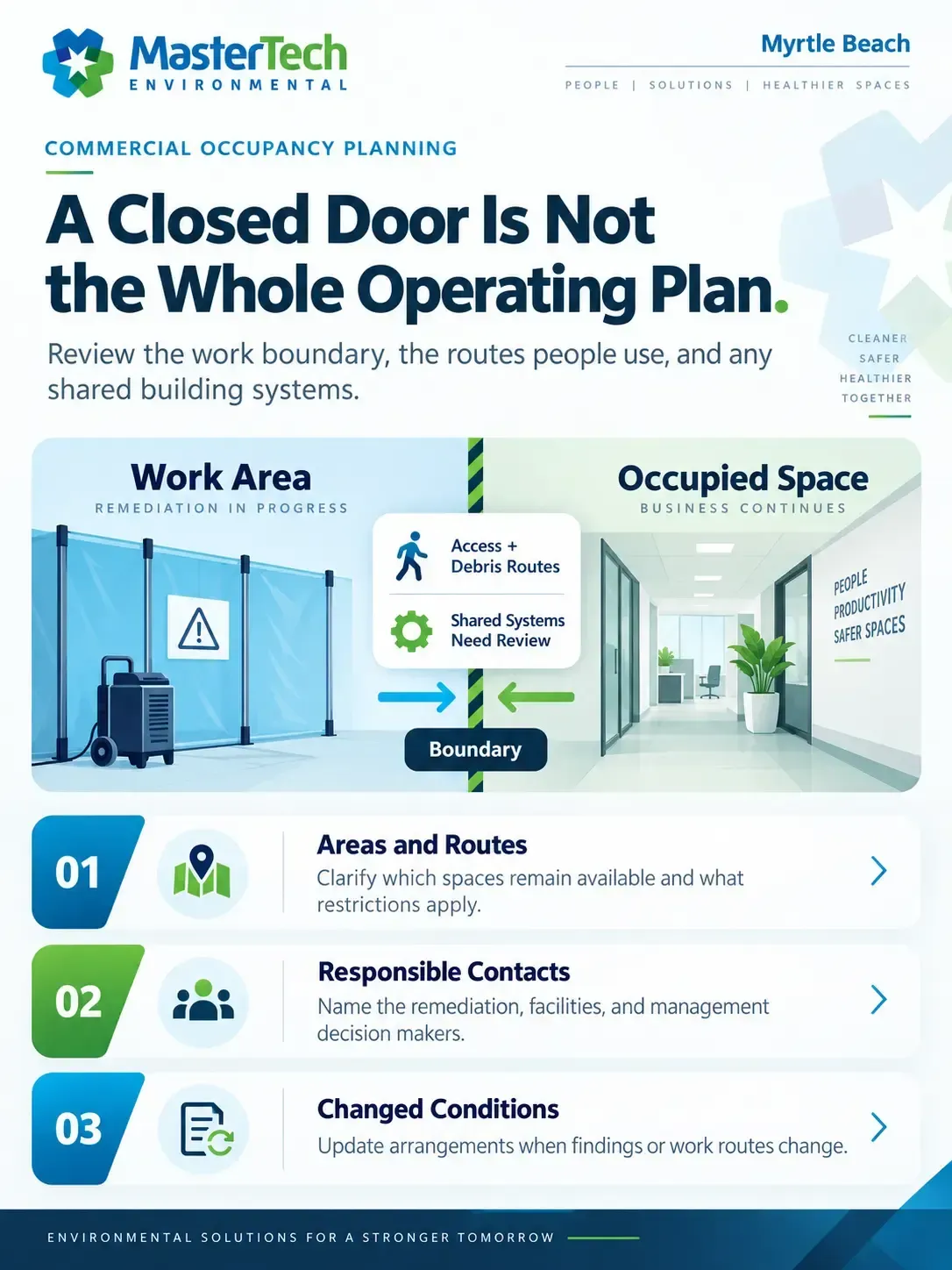
Imagine mold is found in a storage room beside reception. Closing the storage-room door may look like a straightforward way to separate the project. But if debris must pass the reception desk, the plan must also account for visitors and employees using that route. Evening removal might reduce one conflict while leaving another, such as morning deliveries arriving before the area is available. A useful plan explains those transitions instead of treating the closed door as the whole solution.
Do not solve an access conflict by directing people through an unsuitable route or having office staff alter building systems. Raise it with the people responsible for remediation, facilities, and workplace operations. The answer may involve rescheduling a task, relocating a function, or changing the proposed work arrangements. Make the decision before the conflict occurs, not by the first employee who encounters a barrier.
Understand What Separates Work From Occupied Space
Containment limits mold and debris from moving beyond the work area. Our remediation planning considers the affected scope and the appropriate controls. Ask us to explain the proposed boundaries in ordinary terms: which areas are involved, how entry and material removal will be handled, and what restrictions apply nearby. Equipment names alone don't tell your staff where they can work or confirm that you've resolved every occupancy concern.
If HVAC contamination is known or suspected, obtain professional assessment before continued use. A mold-contaminated system should remain off until it has been remediated; any operating exception requires qualified professional judgment that it will not increase occupant or worker exposure. Involve an experienced HVAC professional in the relevant decisions. Do not ask staff to improvise duct sealing or assume an air cleaner makes a contaminated shared system acceptable to keep running. Trusting the best Mold Remediation Myrtle Beach has to offer ensures the safety and sanity of employees.
| Decision |
What management needs to know |
| Areas in use |
Which rooms and routes remain available, with restrictions and the basis for those arrangements explained. |
| Shared systems |
Who will evaluate relevant HVAC concerns and authorize any required system changes. |
| Work timing |
When disruptive activities occur and how people and deliveries will be directed around them. |
| Changed conditions |
Who reviews additional findings, pauses affected activities, and communicates a revised arrangement. |
| Return to normal use |
Who reviews completion and identifies remaining repairs, restrictions or follow-up before routines resume. |
Give Your Team Information They Can Use
Employees need more than a notice that a contractor is coming. Tell them what area is affected, what the current arrangements are, and whom to contact with questions. Explain what remains undecided instead of filling the gap with a promised finish date. Individual health concerns need appropriate medical guidance and consideration in the occupancy discussion; a general description of the equipment is not an individual health assessment.
- Name the management contact before work begins. Make sure that person can reach the remediation and facilities contacts, including when scheduled work occurs outside normal office hours.
- Identify temporary arrangements in plain language. Tell people which room, route, or service is unavailable and what approved alternative to use. Avoid expecting them to interpret barriers on their own.
- Explain the next decision point. If an area cannot be confirmed until further assessment, say when another update is expected rather than presenting the initial schedule as certain.
- Include people who arrive outside the main shift. Cleaners, delivery drivers, tenants and contractors may need the same access information as employees who attend the morning briefing.
- Provide a way to raise concerns. Route questions to the responsible person and take health concerns seriously. Keep private health information within the appropriate management and medical channels.
- Update the notice when conditions change. An additional affected area or a revised work route can invalidate yesterday's instructions even if the overall project has the same name and contractor.
For example, a notice can say that a named room is temporarily unavailable, identify the management contact, and give the next update time. That is useful even when the completion date is not yet established. It helps people follow the current plan without implying that every uncertainty has already been resolved.
Make the Operating Decision with the Scope in Front of You
In the storage-room example, keeping reception open depends on separating work, the debris route, relevant HVAC decisions, and the needs of the people using the building. If the project team cannot maintain appropriate arrangements around those activities, reception may need to move, or that part of the business
We can discuss the mold assessment and proposed remediation scope so you can plan the business response around the actual work, including any decisions that need facilities staff or other specialists.