Does Attic Mold Remediation Require Replacing the Wood?
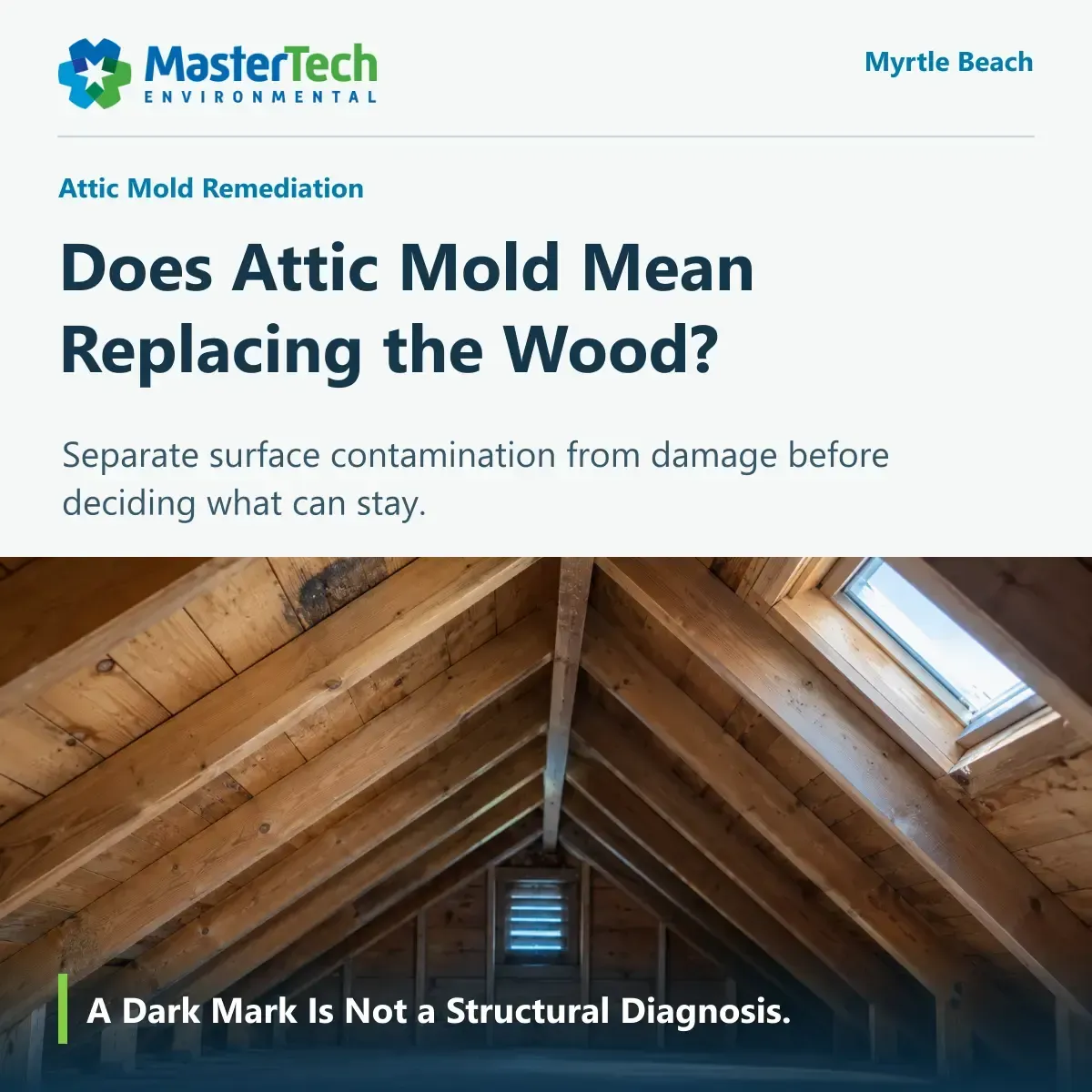
Dark patches on attic wood don't automatically mean you need to rebuild your roof. They also don't mean every affected board can stay. Attic mold remediation begins with establishing what is affected and the condition of those materials. At MasterTech Environmental of Myrtle Beach, we want that distinction to be clear before you compare a cleanup estimate with a roof-replacement proposal. The work should follow the findings, rather than the most alarming photograph.
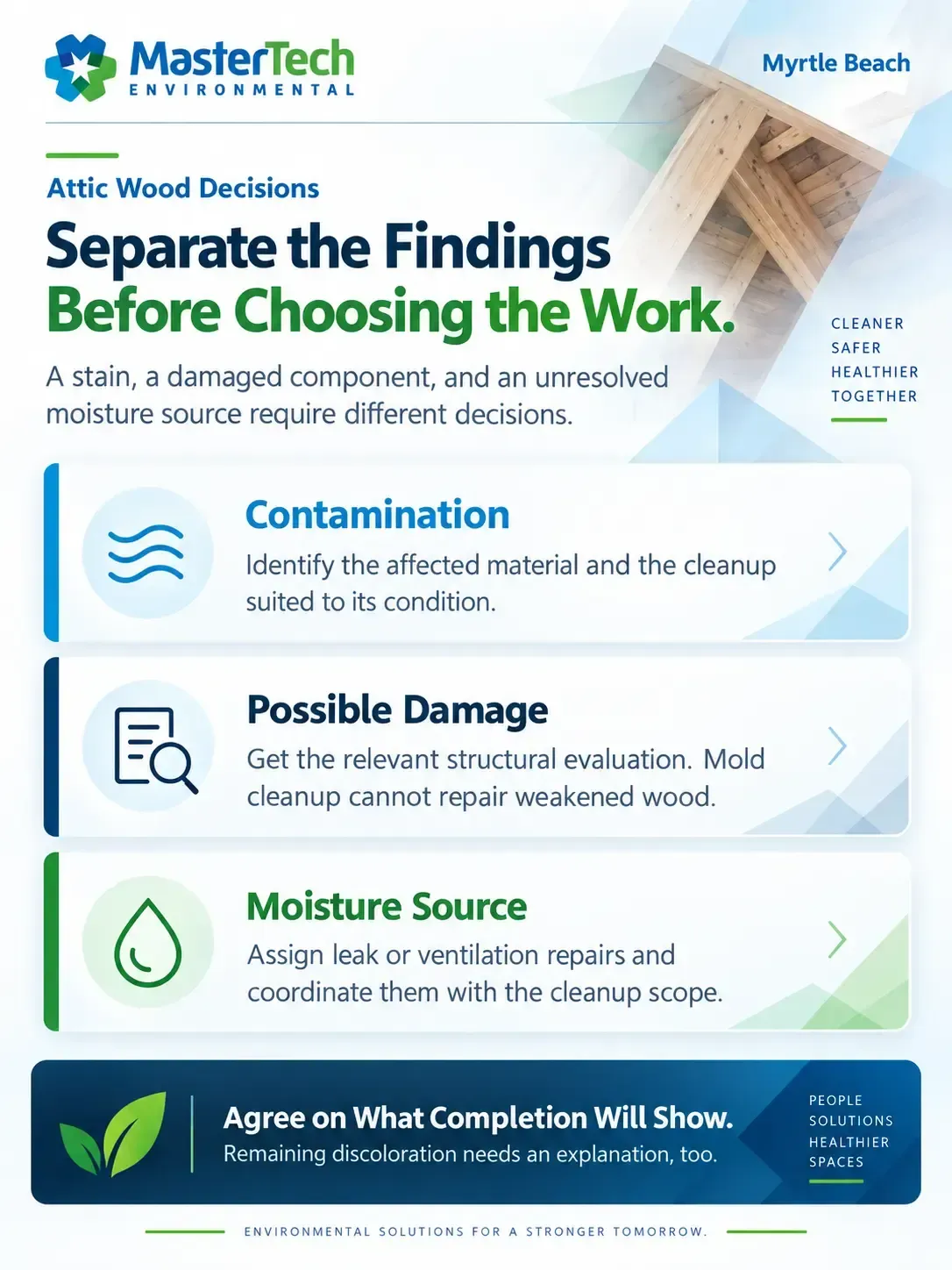
A Stain and a Damaged Board are Different Findings
The wood you see in an attic has different jobs. Some members support the roof, while the decking forms the surface beneath the roofing. An assessment needs to identify which material is affected and whether the concern is contamination, damage, or both. Wood can be suitable for mold cleanup in some circumstances. Appearance alone is not enough to decide whether it can be retained, and cleaning treatment cannot repair weakened building components.
If you're concerned about structural damage, a structural engineer or other qualified professional should evaluate it. Don't mistake a mold inspection for that separate determination. Ask which conclusion comes from the mold assessment and which comes from evaluating the building itself. You should not have to climb across attic framing or press into suspect wood to decide whose recommendation is right.
Consider the difference between two recommendations. One identifies a specific damaged section and explains why it needs repair or replacement. The other says the entire roof must go because the attic looks dark. The first gives you a finding to discuss; the second leaves the reason unanswered. The same scrutiny belongs on an assurance that every board can be saved. Ask what supports the proposed work in each area.
| Finding to clarify |
What the decision should address |
| Suspected growth on attic wood |
Establish the affected material and the cleanup appropriate to its condition. |
| Possible damage to a building component |
Obtain the relevant structural or building evaluation before deciding it can remain. |
| An unresolved leak or moisture source |
Assign the correction as well as the cleanup; confirm what each proposal includes. |
| Discoloration after cleaning |
Ask how the remaining mark was evaluated, rather than judging completion by color alone. |
Keep the Moisture Correction in the Same Conversation
Mold cleanup does not replace correcting the dampness that allowed the growth. During an inspection, we consider where moisture is affecting the attic as well as the visible areas of concern. Tell us about roof leaks, earlier repairs, and anything unusual you have noticed overhead. That history helps guide the discussion, but a known leak or previous repair does not mean every moisture source has been resolved.
Imagine you are comparing a roof proposal that includes replacing damaged decking above one bedroom with a cleanup estimate covering accessible rafters elsewhere in the attic. Those prices do not describe the same work. Ask each provider to mark the areas on the same photographs or a simple sketch, explain the findings behind their recommendation, and state what moisture-related repair each includes. You can then see where repair and cleanup need to meet without assuming all dark wood is damaged, or all damaged wood can be cleaned.
With those locations identified, clarify the work sequence before accepting either proposal. A roof repair may need to precede cleanup, or opening a damaged section may reveal an area that needs further evaluation; the findings should determine the order. Confirm who will handle any roofing or ventilation corrections and how they will communicate completion. A necessary repair should not disappear between two estimates simply because each contractor describes a different part of the attic.
Know What You Are Authorizing Before Work Starts
You do not need to choose the treatment method yourself. You do need an explanation of what they'll work on and why. We recommend reviewing the proposed areas, any access limitations, and the way additional findings would be handled before approving the job. Keep that information with your roof and ventilation records, especially if more than one contractor is involved.
- Ask which attic materials are included. A proposal for roof decking does not automatically include every piece of insulation, stored item, or other surface in the attic. Make the included areas clear.
- Discuss the reason for any removal. If insulation or wood is to be discarded, ask what finding supports that step and whether replacement is included or belongs to another contractor.
- Identify the work needed outside cleanup. Roof repairs, exhaust changes, and structural evaluations should have named responsibilities rather than being assumed parts of the remediation price.
- Clarify access through the home. Discuss where the crew will enter and how work or material removal affects your household. Follow the agreed restrictions, and don't enter the attic to check progress.
- Ask what happens if more damage is found. Know how the new finding will be explained, how the price or schedule may change, and who must approve the additional work.
- Agree how completion will be reviewed. Ask what information you will receive about work performed, remaining discoloration, and any repairs or follow-up outside the completed scope.
Decide From the Condition of the Wood and the Completed Work
Mold can leave cosmetic staining, so successful cleanup does not necessarily restore wood to a new appearance. That is a reason to ask how the result was evaluated, not a reason to ignore a mark or assume every mark requires replacement. Covering discoloration also does not prove the underlying issue is resolved. The completion discussion should connect the original findings with what was done and what still needs attention.
Some attic wood can remain after appropriate cleanup; damaged components may require additional evaluation and repair. Your home's answer depends on those findings and on correcting the moisture problem. Call MasterTech Environmental of Myrtle Beach at 843-236-3399 to discuss an attic mold inspection. Tell us what you have noticed and any known roof or ventilation history so we can discuss next steps without jumping straight to a full roof replacement.