Why Do Vented Crawlspaces Cause Mold in Coastal Myrtle Beach Homes?
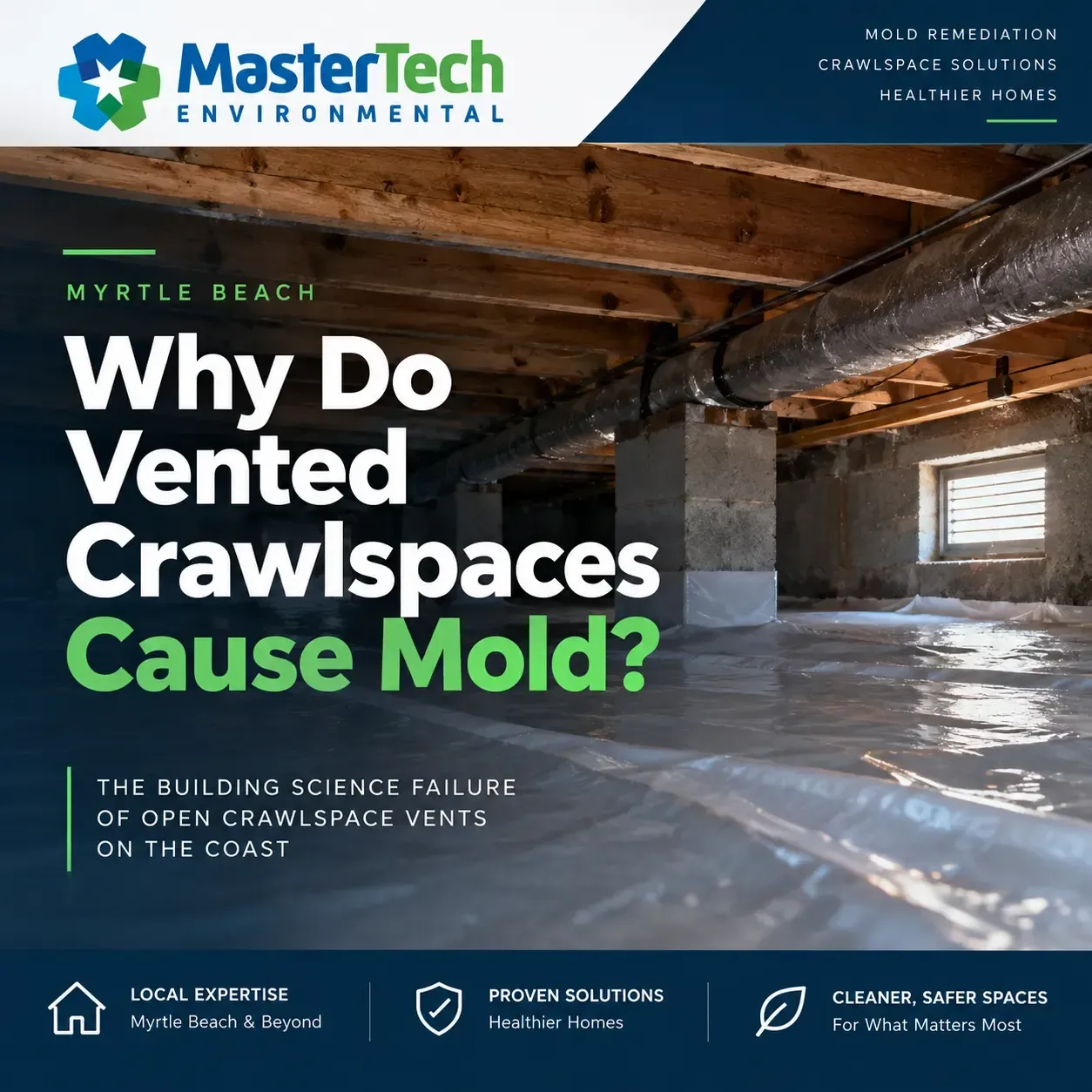
The Building Science Failure of Open Crawlspace Vents on the Coast
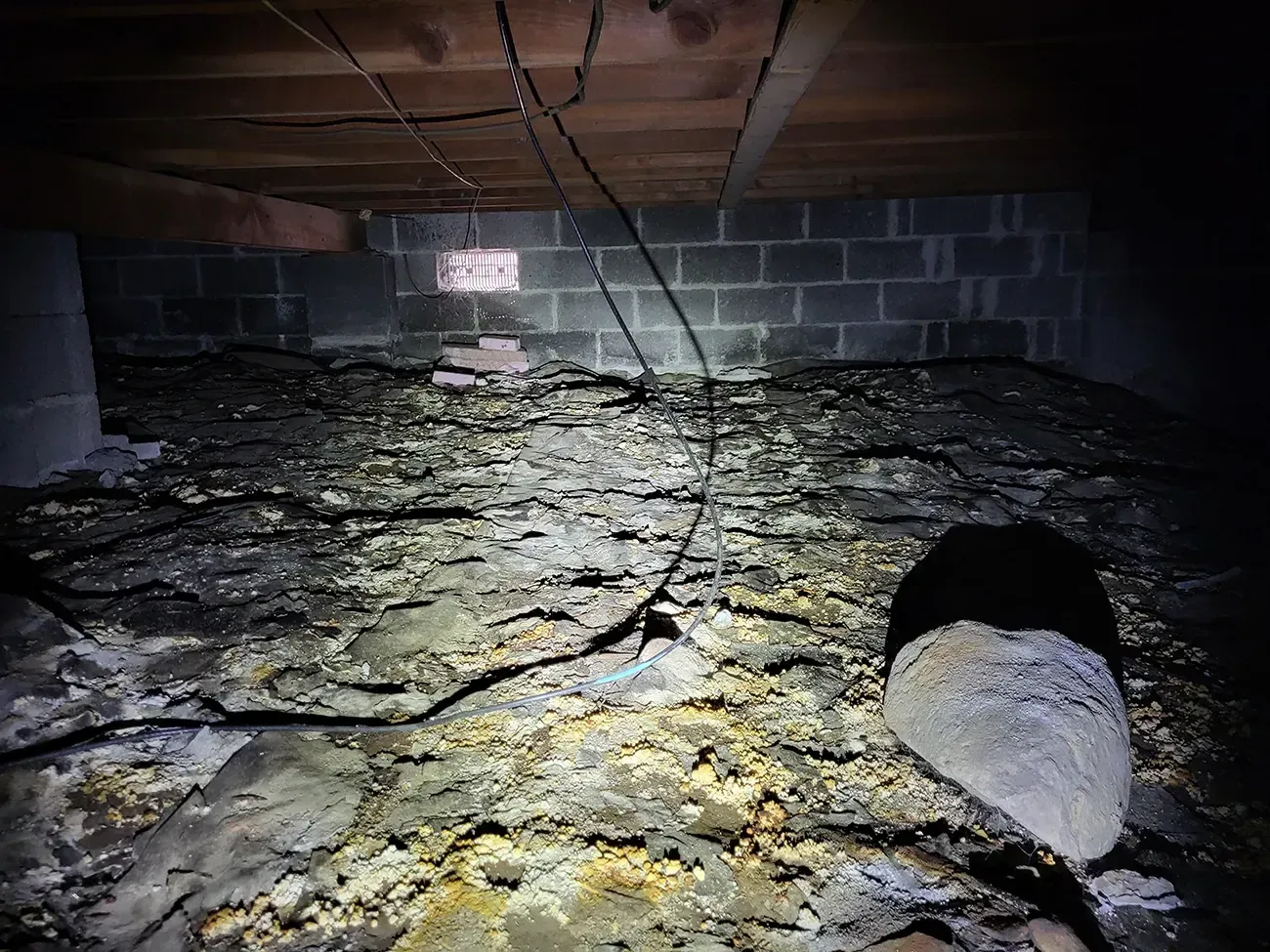
For generations, residential building codes across South Carolina required homes built on crawlspace foundations to have open exterior vents to encourage natural cross-ventilation. For coastal homeowners seeking effective crawlspace mold remediation, this legacy building practice has proven to be a catastrophic engineering mistake. Along the Grand Strand, where ocean breezes carry humid air with relative humidity often exceeding eighty-five percent, opening foundation vents does not dry out a home—it acts as an open floodgate for atmospheric moisture.
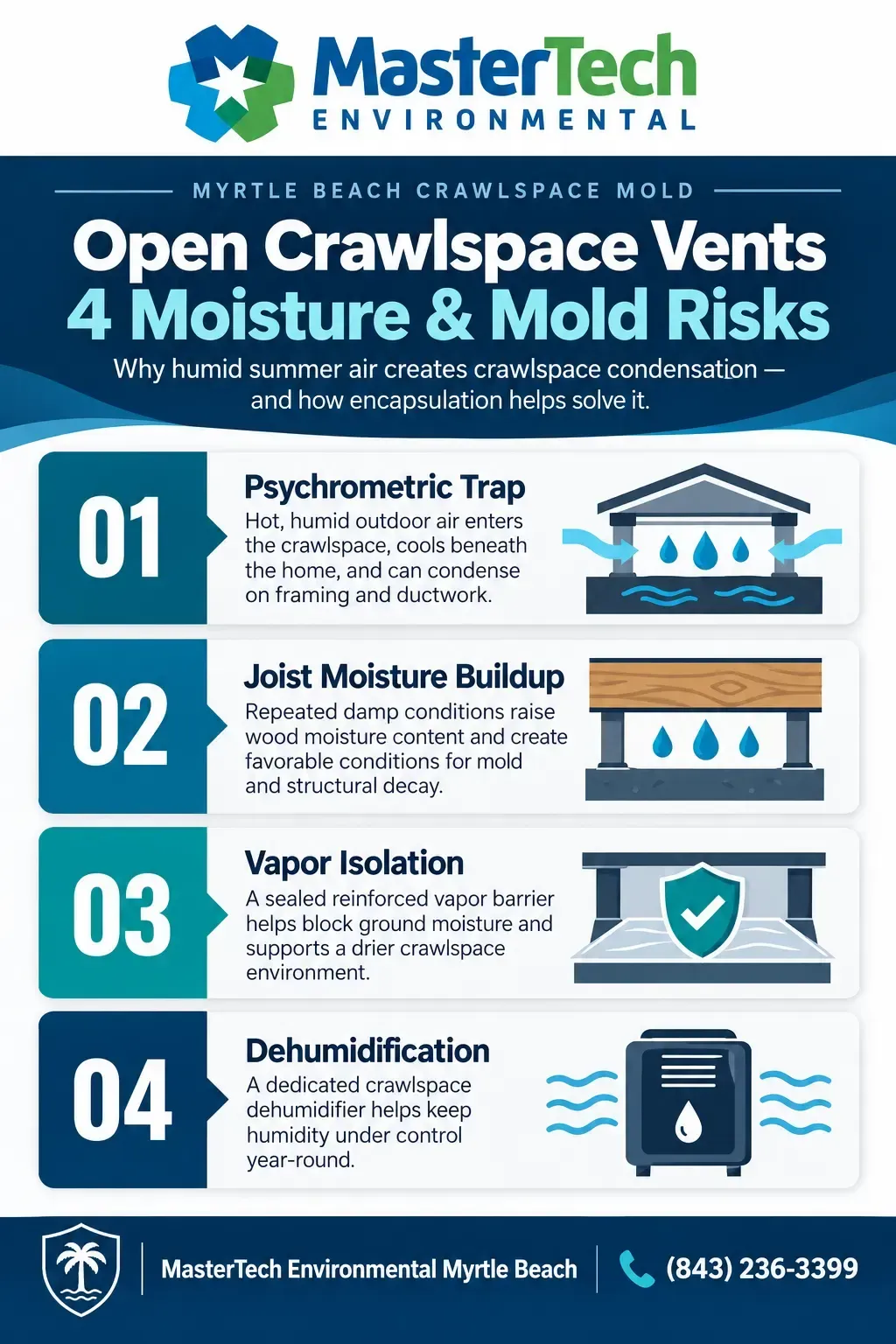
When warm, saturated coastal air enters foundation vents and encounters the underside of a home cooled by central air conditioning, basic psychrometric physics takes over. The warm ocean air hits the cold subfloor framing, reaches its dew point, and condenses into liquid water. Over time, this constant condensation rots floor joists, ruins upstairs hardwood flooring, and turns the crawlspace into an aggressive breeding ground for wood-decaying fungi.
The Psychrometrics of Coastal Air: Temperature Inversions Beneath Beach Houses
To understand why vented crawlspaces fail along the South Carolina coast, one must look at the science of the dew point. In July or August in Myrtle Beach, outdoor air is frequently 90 degrees Fahrenheit with 80 percent relative humidity. That air carries a dew point of approximately 83 degrees. Meanwhile, inside the home, the air conditioning is set to a comfortable 70 degrees, chilling the subfloor plywood and wooden floor joists to roughly 68 to 72 degrees.
When 83-degree dew-point air flows through foundation vents and contacts the 70-degree floor framing, it instantly cools below its saturation point. The moisture can no longer remain a vapor; it condenses into liquid water droplets directly onto wood framing, metal ductwork, and electrical wiring. In essence, open vents cause it to rain beneath your living room floor all summer long.
Hardwood Floor Cupping vs Crowning: Forensic Indicators of Subfloor Moisture
One of the most frequent reasons coastal homeowners discover crawlspace moisture problems is damage to their interior hardwood floors. Wood is hygroscopic and expands as it absorbs moisture and contracts as it dries.
When high humidity saturates the crawlspace beneath your home, the following can occur:
- Floorboard Cupping: The underside of oak or pine flooring absorbs moisture from the damp crawlspace, swelling dramatically while the top surface remains dry in the air-conditioned room. This differential expansion forces the edges of each plank upward, creating a washboard or concave profile across your floor.
- The Fatal Sanding Mistake: Unwary homeowners often hire floor sanders to sand down raised board edges during summer. When winter arrives and the crawlspace dries, the flattened boards contract, causing the centers of the planks to crown upward into permanent peaks that destroy the flooring assembly.
- Buckling and Subfloor Delamination: In severe cases, expanding floorboards exert thousands of pounds of lateral pressure, tearing free from subfloor fasteners, tenting into the room, and tearing subfloor plywood apart.
The 'Stack Effect': How Crawlspace Air Infiltrates Your Living Spaces
Many coastal property owners assume that whatever happens beneath their subfloor stays separated from their daily living areas. In reality, a home behaves like a thermal chimney due to a natural thermodynamic principle known as the 'stack effect.'
As warm air naturally rises through upper living areas and exits through ceiling fixtures, attic vents, and roof ridges, it creates continuous negative pressure in the lower levels of the house. This suction draws up to fifty percent of your indoor breathing air directly from the crawlspace through subfloor penetrations, plumbing chases, electrical conduits, and HVAC returns. If your crawlspace is contaminated with fungal colonies, your family is constantly inhaling those airborne spores.
Wood Moisture Content: The Biological Thresholds of Structural Rot
When crawlspace relative humidity remains consistently above seventy percent, the moisture content of the wooden framing climbs into the danger zone.
- Safe Equilibrium Range (Under 15% WMC): Wood framing remains dry, stable, and completely immune to fungal colonization or wood-boring insect activity.
- Surface Mold Germination (16% to 19% WMC): Surface molds like Cladosporium and Penicillium begin colonizing the exterior face of joists, releasing musty volatile organic compounds.
- Active Wood Decay (20% to 28% WMC): Wood-destroying brown rot and white rot fungi (such as Poria and Serpula) actively digest the cellulose and lignin fibers of main girders and floor joists.
- Fiber Saturation & Structural Failure (Above 28% WMC): Wood fibers become fully saturated, leading to severe deflection, spongy, bouncy floors, door frame racking, and intense subterranean termite attraction.
Comparing Vented Dirt Foundations with Modern Sealed Encapsulation
| Foundation Parameter |
Traditional Vented Coastal Crawlspace |
Full 20-Mil Sealed Encapsulation System |
| Humidity Control |
Fluctuates with outdoor ocean weather (75% to 95% RH) |
Consistently maintained between 45% and 55% RH year-round |
| Subfloor Insulation |
Porous fiberglass batts that trap moisture and fall down |
Continuous rigid foam insulation or thermal rim joist sealing |
| Ground Moisture Barrier |
Thin, punctured 6-mil plastic sheets lying in dirt |
Heavy-duty 20-mil reinforced vapor barrier taped and anchored to walls |
| Indoor Air Quality |
Transfers musty odors, mold spores, and radon upward |
Provides clean, dry, conditioned air that improves home breathing health |
| HVAC Energy Efficiency |
Ductwork sweats in hot humid air, spiking electric bills |
Encapsulated space keeps ductwork conditioned, cutting cooling costs by 15-20% |
| Pest Resistance |
Damp wood invites termites, roaches, and wood-boring beetles |
Dry, sealed environment eliminates the moisture insects require to survive |
The Engineering of Permanent Encapsulation and Active Dehumidification
Stapling up fresh fiberglass insulation or installing powered foundation fans only worsens condensation by drawing in more wet ocean air. The only scientifically validated method for protecting coastal crawlspaces is permanent encapsulation.
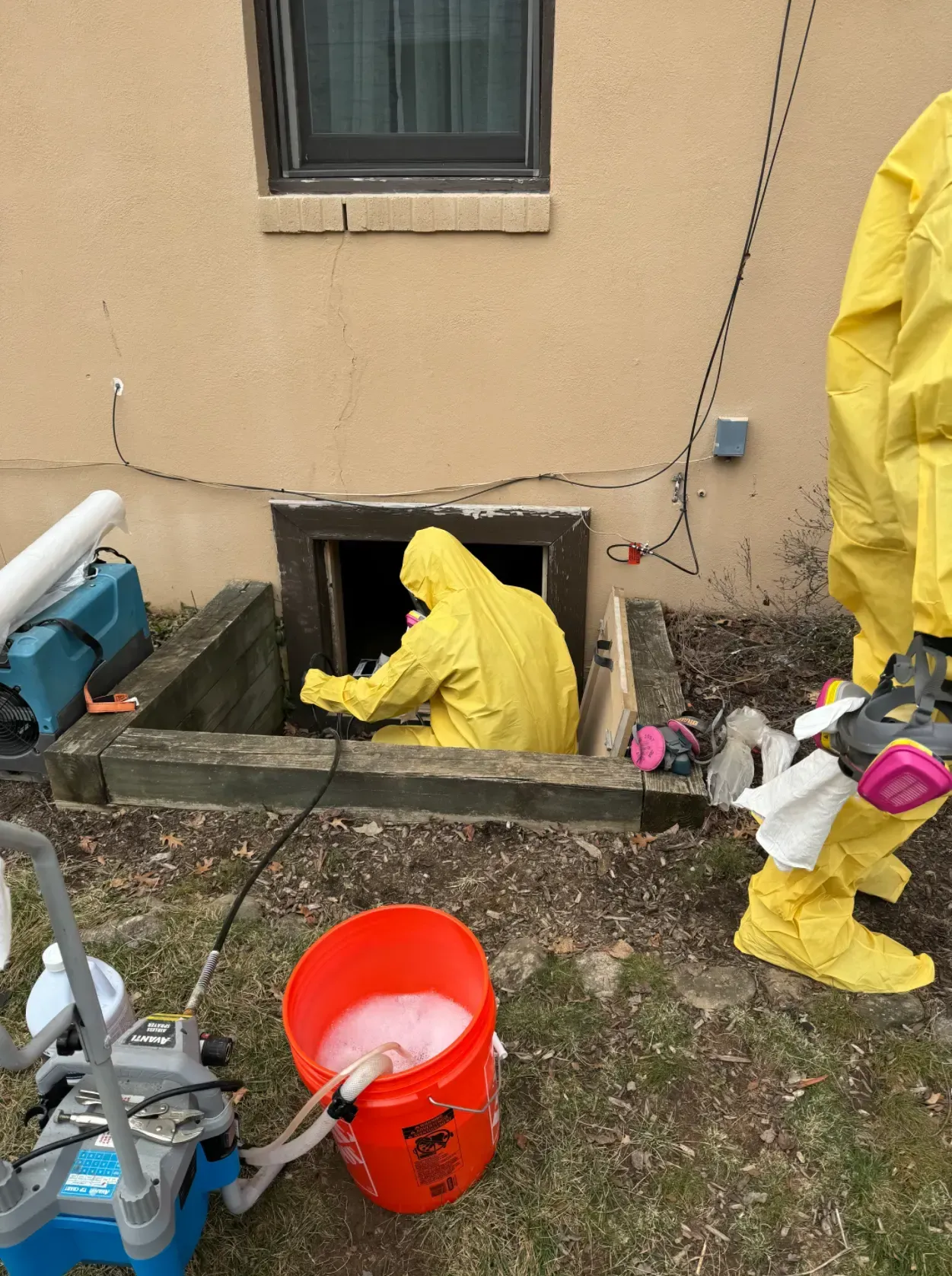
- Source Remediation and Wood Sanitization: Physically remove all existing fungal growth from joists and subfloors using HEPA abrasive scrubbing, then apply an EPA-registered antimicrobial wood sealant.
- Hermetic Vent Sealing and Heavy-Duty Barrier: Permanently seal every exterior foundation vent with airtight covers. A multi-ply, 20-mil puncture-resistant reinforced vapor barrier is sealed seamlessly across the entire ground floor and anchored to the foundation walls.
- Dedicated Low-Temperature Dehumidification: A heavy-duty, commercial-grade crawlspace dehumidifier is hard-plumbed to maintain relative humidity strictly below 55 percent, preventing moisture from ever accumulating again.
Preserving Your Grand Strand Home's Structural Integrity
A rotting crawlspace is not merely an aesthetic nuisance; it actively threatens your home's structural stability, resale value, and indoor air safety. Living on the South Carolina coast offers incredible lifestyle advantages, but coastal home ownership demands respect for regional building science.
If your floors feel springy, your oak hardwood is beginning to cup along the seams, or you notice a persistent earthy smell in your living room, do not wait for structural failure. Investing in professional crawlspace assessment, physical mold remediation, and complete encapsulation will safeguard your coastal home, slash cooling costs, and ensure your family breathes clean, dry air for decades to come.