Attic Mold Inspection in Myrtle Beach: Why Condensation Deserves a Closer Look
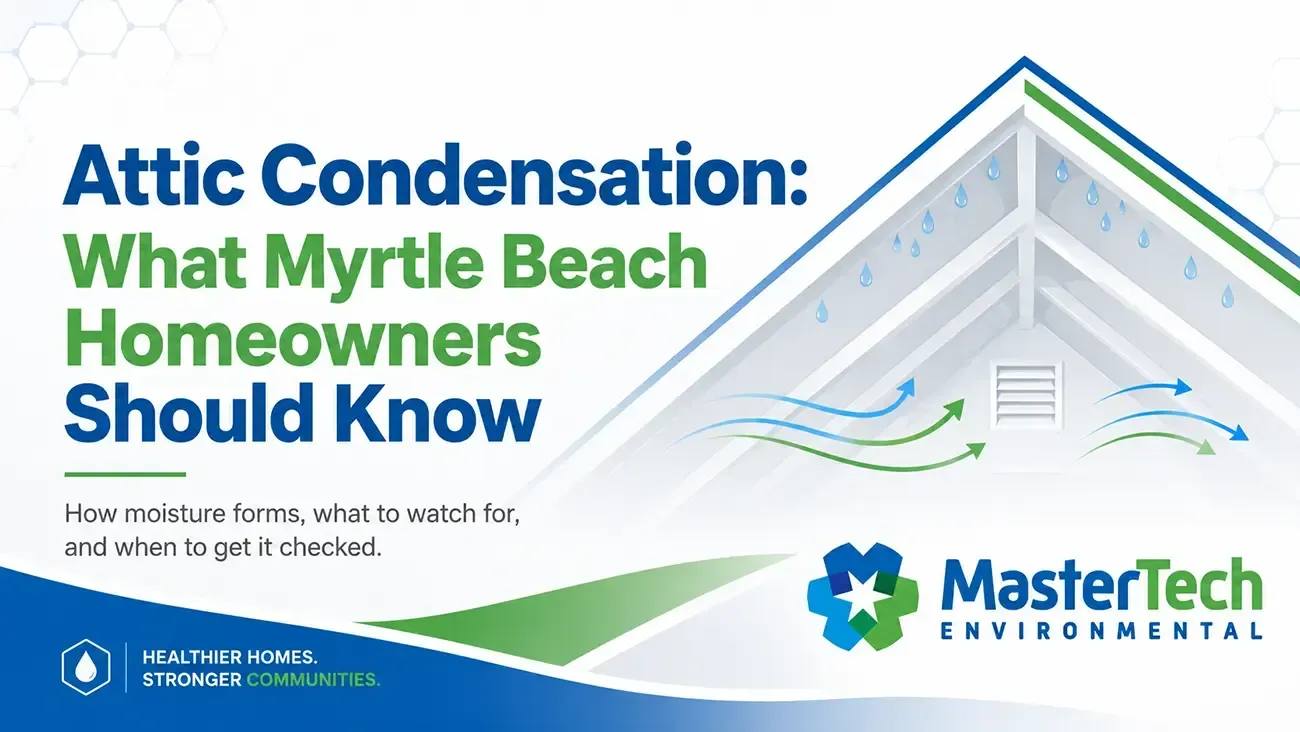
Dark staining or damp wood in the attic often directs a homeowner’s attention straight to the roof. A loose shingle, failed flashing, plumbing leak, or bathroom fan vented into the attic can add moisture. However, an attic can become wet even when no active leak appears. Humid air can reach a cooler surface and turn into liquid water there. At Mastertech Environmental of Myrtle Beach, we treat that distinction as important because a stain shows where moisture collected, not necessarily where it began.
Condensation may not leave a steady drip or obvious entry point. It can appear on roof sheathing, fasteners, ductwork, or HVAC equipment and then partly dry. In the Myrtle Beach area, humid air and cold attic equipment can create the conditions for that moisture to form. The important first step is determining whether the water came through the building envelope or formed inside the attic.
Attic Moisture Does Not Always Start With a Roof Leak
A roof leak delivers liquid water through a defect in the building envelope. Condensation begins as water vapor and becomes liquid after humid air meets a sufficiently cool surface. The National Weather Service defines the dew point as the temperature at which air reaches saturation and water vapor begins changing into liquid. In an attic, droplets can form on roof sheathing, nail tips, duct jackets, or air-conditioning equipment without rain passing through the roof.
| What you notice |
What it may indicate |
What it does not prove |
| Dark sheathing stains |
Condensation or water intrusion |
An active roof leak |
| Rusted nails or straps |
Repeated moisture |
Where the moisture began |
| Damp insulation |
A leak, condensation, or HVAC issue |
Which pathway caused it |
| Water on ductwork |
A surface below the dew point |
One attic-wide cause |
Air movement determines where humid air meets a cold surface. During cooler weather, indoor air can pass through ceiling gaps and reach colder roof sheathing. During warm, humid weather, attic air can contact cold ducts or air-conditioning equipment and create visible “sweating.” Stack effect can move indoor air upward, but it is only one force; wind and HVAC pressure differences can also move air through the house and attic.
Four Conditions That Can Create Attic Condensation
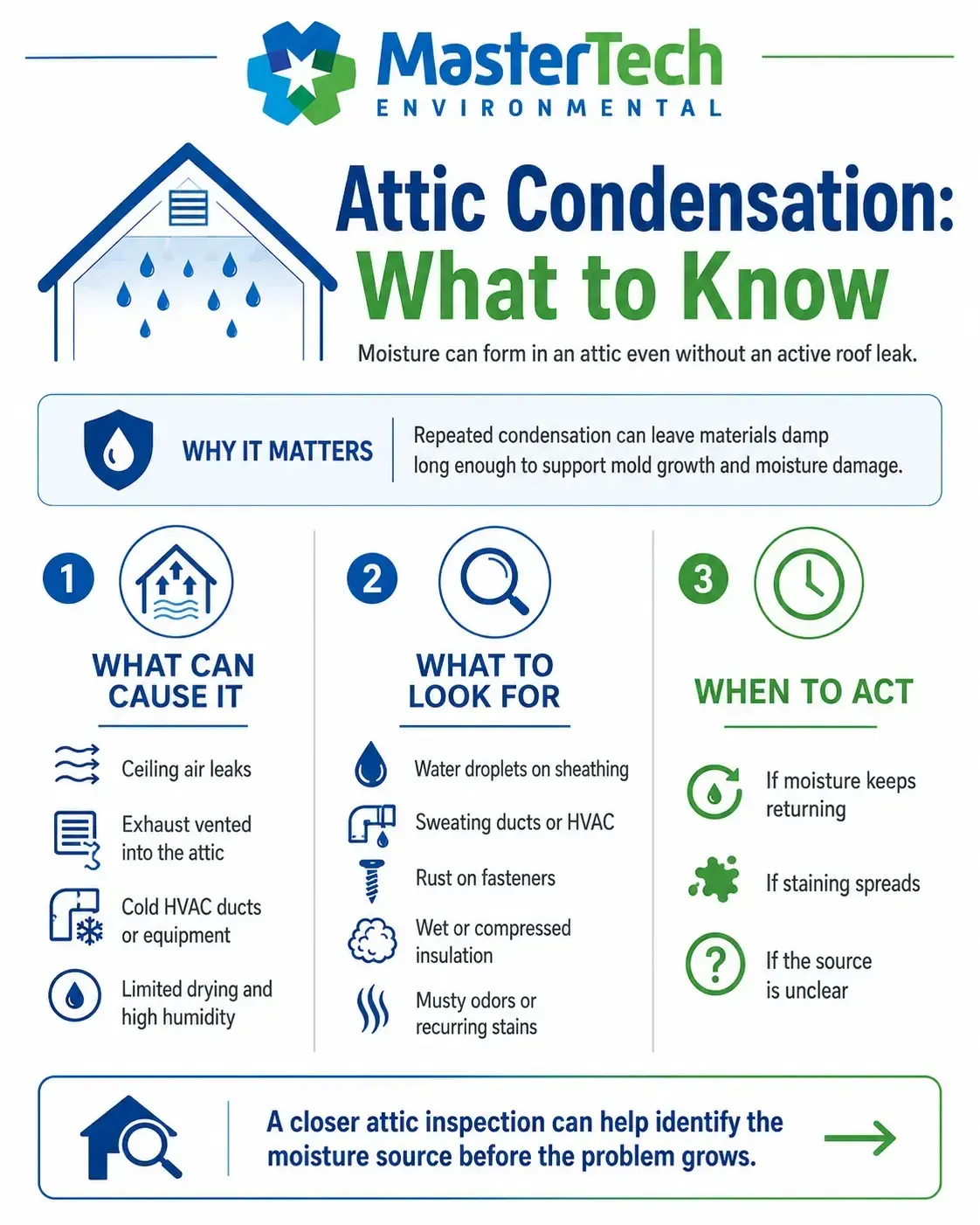
Condensation forms when moisture-laden air reaches a surface cold enough to drop below the dew point. The practical question is what allowed that humid air and cold surface to meet in the first place. In Myrtle Beach homes, several common conditions can create that opportunity.
1. Ceiling-plane air leakage. Gaps around attic access points, utility penetrations, light fixtures, duct boots, and framing connections can let indoor air move into the attic.
2. Exhaust air released into the attic. A leaking, disconnected, or improperly terminated bathroom or other exhaust duct can add a concentrated source of moisture.
3. Cold HVAC equipment or ductwork. Ducts, air handlers, and refrigerant lines can fall below the dew point of humid attic air. Damaged insulation, leakage, drainage problems, or breaks in the vapor jacket can increase sweating.
4. Limited drying conditions. Wet insulation, obstructed intended airflow, persistent humidity, or another unresolved moisture condition can slow the attic’s ability to dry.
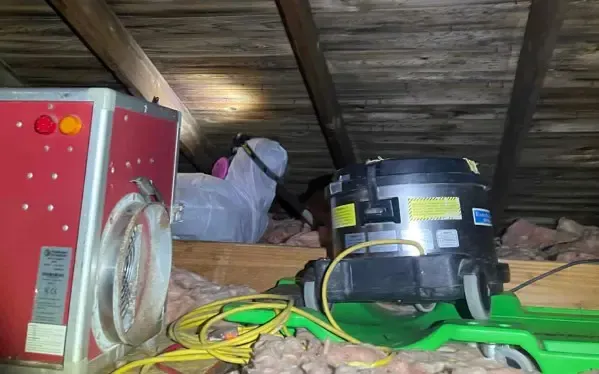
One condensation event does not automatically mean an attic has developed mold. Mold growth depends on the material, temperature, moisture level, and how long damp conditions persist. Peer-reviewed building-material research shows that changing moisture and temperature conditions affect mold development, which means brief wetting and repeated or prolonged dampness are not the same problem. EPA guidance also places moisture control at the center of mold prevention. For our team, visible attic mold raises a second question immediately: what kept the material wet long enough for growth to develop?
What Myrtle Beach Homeowners Should Look For
Homeowners should not walk across unfinished framing or move through a poorly lit attic to inspect every surface. A safer check begins at a stable access point and focuses on visible or recurring moisture patterns. If you notice any of the following conditions, the attic deserves a closer look:
· Water droplets, a damp shine, or repeated wetting on roof sheathing
· Water marks on ducts, air handlers, or refrigerant lines
· Rust on nail tips, brackets, duct straps, or other metal components
· Wet, matted, compressed, or discolored insulation
· Dark staining that expands, returns, or appears in several areas
· A persistent musty odor near the attic access or upper rooms
A visual check becomes especially useful after a known roof, plumbing, exhaust, or HVAC problem or when a new odor, stain, or ceiling mark appears. The response should match the condition. Ceiling leakage may call for air sealing, exhaust ducts should terminate outdoors, and sweating equipment may need an HVAC evaluation. Homeowners should also keep intended ventilation paths clear, while recognizing that adding more ventilation does not solve every moisture problem in a warm, humid climate.
Find the Moisture Source before It Keeps Returning
Attic mold often is blamed on a roof leak, but condensation can create moisture even when no active drip appears. The real concern is repeated or persistent dampness that gives mold the conditions it needs to develop. An attic mold inspection in Myrtle Beach makes sense when staining spreads, insulation stays wet, condensation returns, a musty odor persists, or the moisture source remains uncertain.
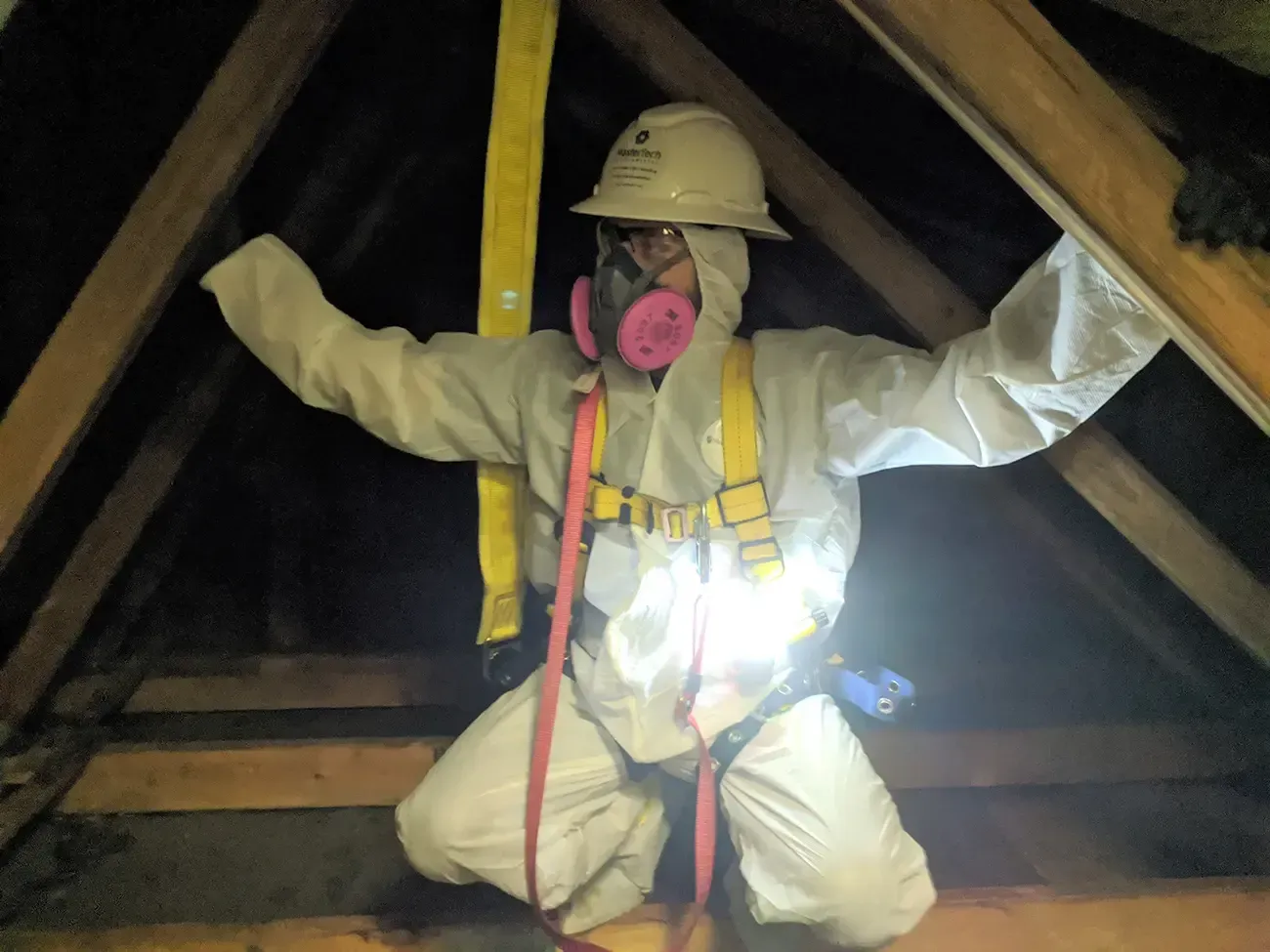
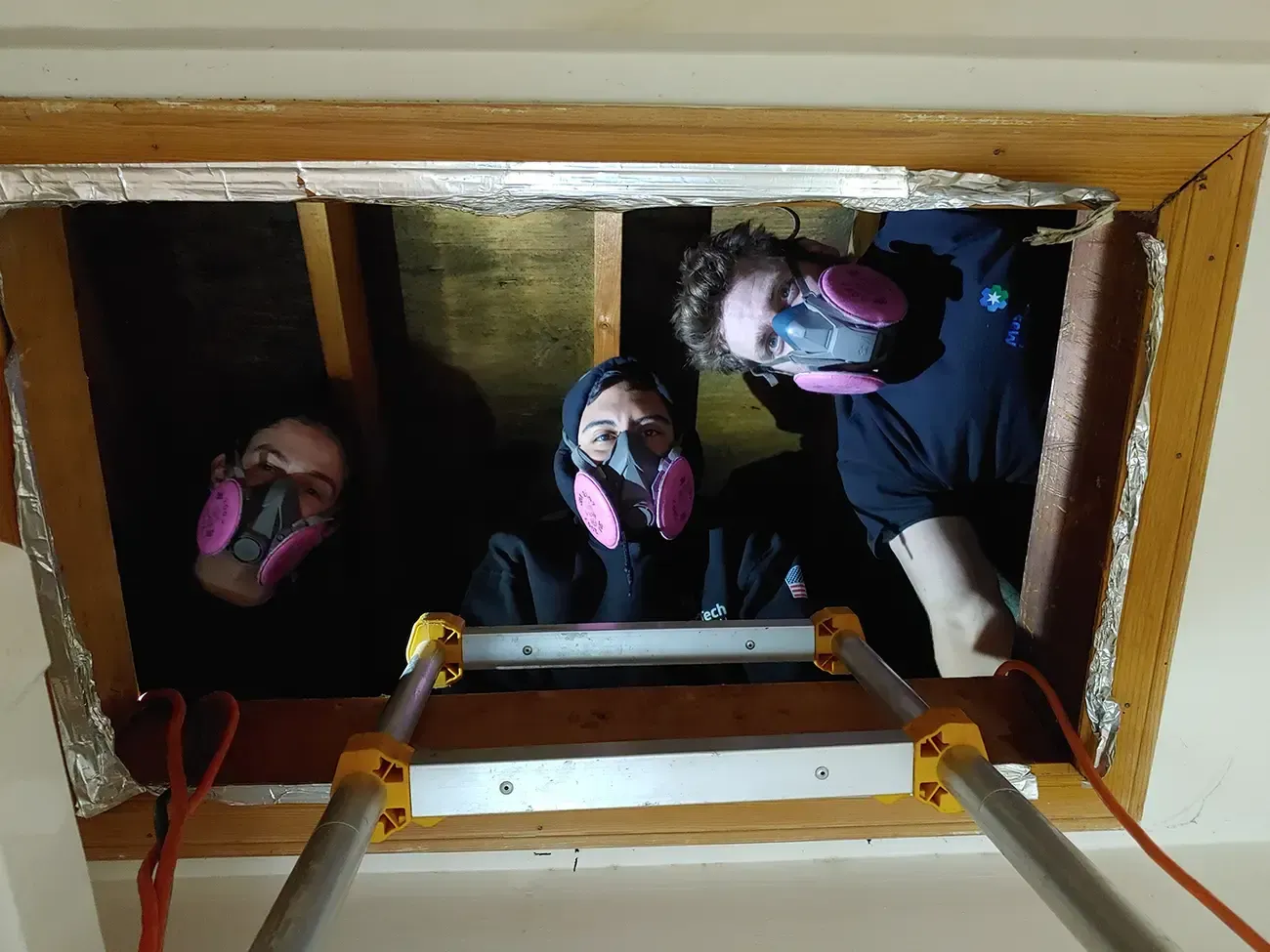
At Mastertech Environmental of Myrtle Beach, our team evaluates the visible condition along with the roof, exhaust, HVAC, insulation, and air movement that may contribute to it. Finding the source gives you a clearer basis for deciding what needs correction and whether you need remediation. Call our team at 843-236-3399 when you need a closer look at attic mold or recurring moisture.