Attic Mold Remediation in Myrtle Beach: The Bathroom Fan Failure & How Pros Fix It
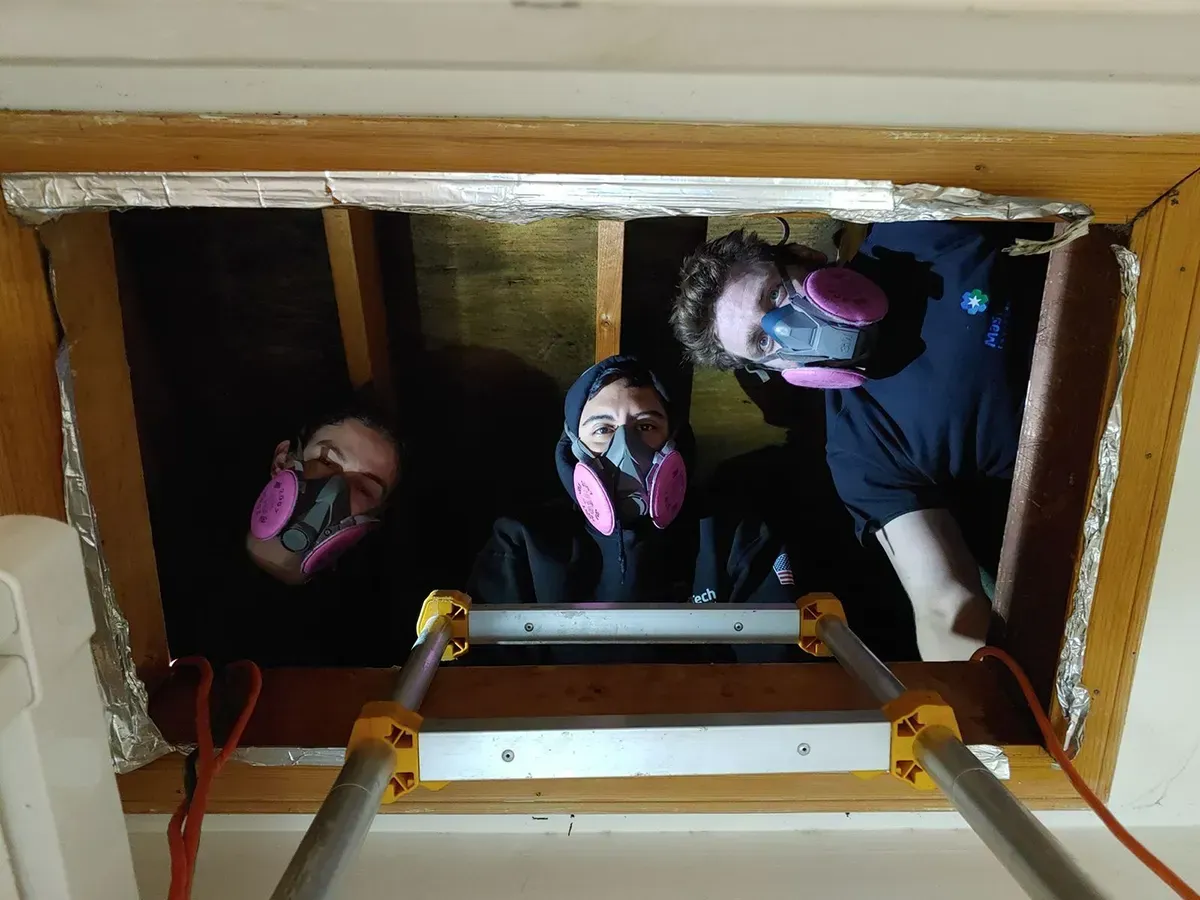
For the conscientious homeowner in Myrtle Beach, the discovery is often a baffling contradiction. You climb into the attic to check on the HVAC or store decorations, only to find the roof sheathing speckled with black "pepper" spots or fuzzy grey colonies, despite the roof being perfectly sealed. The timber is darkening, and the air feels heavy, yet not a single drop of rainwater has entered the home to explain the decay.
This prevalent failure is rarely the result of a storm or a missing shingle, but rather a predictable thermodynamic event in which modern bathroom exhaust systems collide with the humid subtropical climate. It is a mechanical defect that transforms a home's framing into a condensing surface, creating a "wet" attic without a leak. Resolving this structural threat requires moving beyond the "band-aid" approach of chemical cleaning and adopting a ventilation engineering strategy to correct the airflow dynamics that allow moisture to stagnate.
Why You Shouldn't Ignore Your Bathroom Fan and Attic Mold
This phenomenon is not a result of negligence or bad luck, but a systemic reality of the local housing stock. In Horry County, finding extensive microbial growth in an attic without a roof leak is statistically more probable than finding a pristine one, particularly in homes built during the region's rapid expansion. For the "asset protector," this is not an isolated incident but a predictable feature of the local built environment, where the standard construction practices of the last three decades have collided with our unforgiving climate.
The scope of this issue is confirmed by forensic data and the evolution of our local building codes, which paint a clear picture of a widespread, structural challenge rather than a series of individual failures.
- The "Boom" Era Legacy: A significant portion of Myrtle Beach homes were built between 1990 and 2010, a period of explosive growth during which code enforcement regarding ventilation was often less stringent. During this era, terminating exhaust fans "near" a vent rather than sealing them to the exterior was common practice, leaving thousands of homes with built-in moisture traps.
- The Dominant Failure Mode: Forensic analysis identifies improper bathroom venting as the single most prevalent cause of structural fungal contamination in our region, outpacing roof leaks and plumbing failures combined.
- A Consistent Biological Fingerprint: Remediation teams in the area consistently find the same specific fungal genera— Cladosporium and Aspergillus —in attic after attic. This repetitive biological profile indicates a shared regional deficiency in how our homes handle moisture, rather than random environmental contamination.
- Code Correction: The prevalence of this damage forced a shift in the South Carolina Residential Code, which now explicitly mandates strict outdoor exhaust termination to prevent exactly this type of recirculation. The law had to change because the damage was so common.
Common Ventilation Failures That Cause Mold
You turn on the bathroom fan to clear the steam from your mirror, assuming that once the fog disappears, the moisture has safely left your home. But in our humid climate, that moisture often hasn't left the property at all; it has simply moved upstairs to an attic space that is ill-equipped to handle it.
This failure is rarely caused by a broken fan motor, but rather by a specific "thermodynamic collision" where the hot air you are expelling reacts poorly with the cooler environment of your attic. It is a silent process where the laws of physics work against your home every time you take a shower.
- Condensation on Cold AC Ductwork: The air in your bathroom during a shower is roughly 105°F and fully saturated with water vapor. When this heavy, hot plume is pushed into an attic, it inevitably encounters much cooler surfaces, such as your air conditioning ductwork, which often runs at a chilled 55°F. Just like a cold soda can "sweats" on a hot summer day, your AC ducts instantly pull water out of that bathroom air. This creates wet ducts and dripping pipes, providing a continuous water source for mold without a single drop of rain entering the roof.
- Exhaust Recirculating Through Soffit Vents: One of the most frustrating causes of mold is a fan that appears to be vented correctly but is actually trapped in a loop. Many installers terminate the exhaust duct at the soffit—the vented overhang of your roof. The problem is that soffits are designed to be intakes , constantly sucking fresh air into the attic to cool the roof. When you pump moist bathroom air out right next to an intake vent, the house's natural suction immediately draws it back inside. Instead of leaving the house, the moisture recirculates, washing over your plywood and trusses day after day.
- Water Trapped in Uninsulated Ducts: If you peer into your attic, you might see a thin, crinkled vinyl hose connecting your fan to the roof. In our climate, this uninsulated material is a disaster waiting to happen. As the hot shower steam travels through this thin tube across a cool attic, the air inside cools down before it can even reach the exit. The water vapor condenses back into liquid within the duct, getting trapped in the hose's ridges or, worse, running back down into the fan housing and dripping onto your bathroom floor.
Partnering with True Remediation Attic Mold Remediation Experts
The discovery of attic mold often triggers a cascade of anxiety for homeowners, realtors, and building managers alike. Beyond the structural damage, the questions are deeply personal: "Is this making my family or employees sick?" "How do I remove it permanently?" and "Who can I trust to fix the root cause?" We understand that finding fungal growth in your home is not just a maintenance inconvenience; it is a source of genuine stress that requires a compassionate and scientifically sound response.
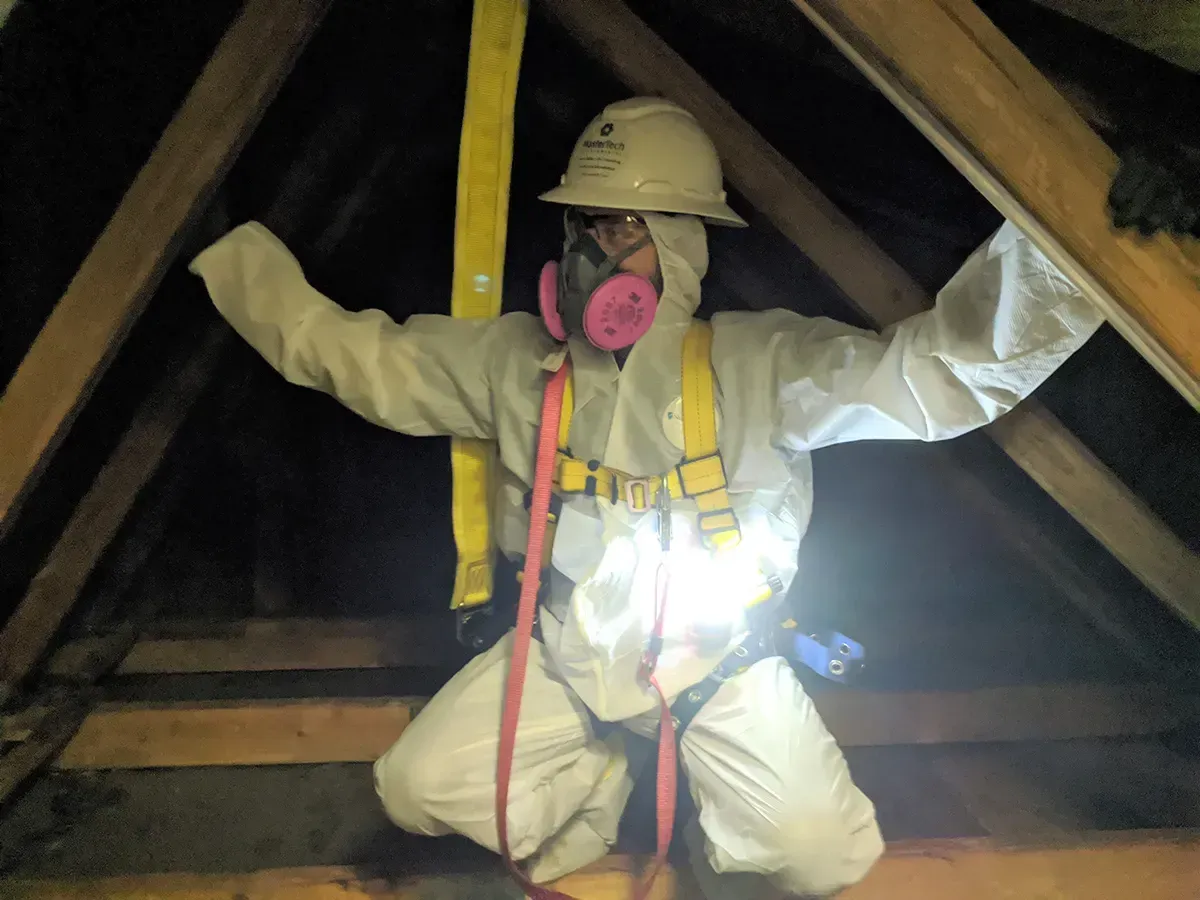
At MasterTech Environmental of Myrtle Beach, we are committed to resolving these complex failures with precision and honesty. As a locally owned, professionally licensed, and industry-certified company, we serve Horry County, Georgetown County, and Brunswick County with a standard of care that goes beyond simple cleaning. We utilize advanced remediation technologies and strict safety protocols to meet the rigorous IICRC S520 standards for restoring your home's health.
Whether you are dealing with moldy drywall, compromised floor joists, or the specific "pepper mold" common to our humid climate, our highly skilled technicians are trained to effectively remove the contamination and return your environment to a safe, mold-free condition. You do not have to navigate the complexities of dew points and ventilation engineering alone.
Take the first step toward a healthy home today. Call us to schedule an appointment with one of our experienced mold experts.